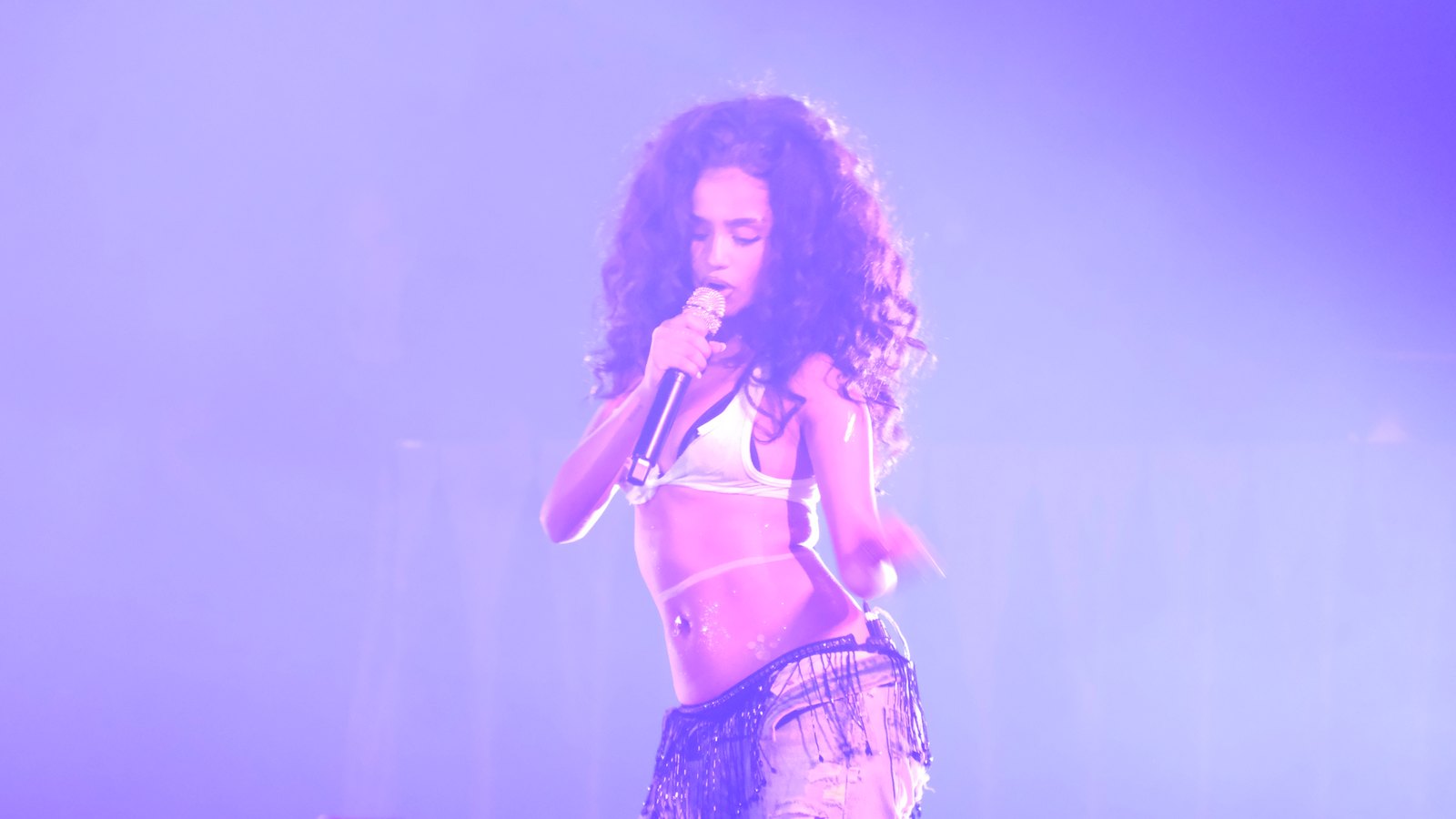
“Water” is the 2023 single by South African singer Tyla that took amapiano’s log drum into mainstream pop. It peaked at No. 7 on the Billboard Hot 100 and won the first Grammy for Best African Music Performance. Here is how the song was built, what the lyrics mean, how it charted, and why it matters for South African music.
Last checked: October 29, 2026
What Is Tyla’s “Water”?
People who search for “tyla water” usually want one of three things: the song, the dance, or the explanation for why a South African amapiano track was playing in American malls and gyms.
“Water” is a short, slinky R&B-pop song placed on top of an amapiano groove. Tyla sings about physical desire over the genre’s signature log drum, which is a deep, rubbery, percussive bass that sounds a bit like a struck tom run through a synthesizer. She smoothed the edges and kept the song under four minutes. The hook works on radio, and the rhythm still works in a Johannesburg club.
That balance is the whole story. Amapiano had already spread across Africa and its diaspora by 2023. “Water” was the song that brought it to people who had never heard of it.
The Story Behind the Song
Who Tyla was before “Water”
Tyla Laura Seethal was born on January 30, 2002, and grew up in Johannesburg. She first got real attention in 2019 with “Getting Late,” a collaboration with producer Kooldrink that circulated widely in South Africa. Epic Records signed her internationally in 2021, and she spent the next two years releasing singles and building an audience online.
By mid-2023 she was a known name in South African pop circles. She was not yet a household name outside them. That changed quickly.
How it caught fire
“Water” came out on July 28, 2023. The release itself was quiet. The dance changed everything.
Tyla filmed herself doing a hip-heavy, rolling routine that draws on bacardi, a dance style connected to Pretoria’s party scene. TikTok users copied it, and then celebrities and dance creators joined in. Within weeks the “Water challenge” was everywhere. Streams followed the clips, and the song entered the Billboard Hot 100 that autumn.
Then came the remix. In November 2023, Travis Scott added a verse. That gave American radio programmers a familiar name to hang the song on and kept “Water” climbing into the new year. Plenty of fans still prefer the solo original, and so do I, because Scott’s verse slows the momentum a little. Commercially, though, the remix did its job.
How “Water” Brings Amapiano to Pop
This is the part I find most interesting. “Water” is not a full amapiano track in the club sense. It is a pop song that borrows amapiano’s engine. Which elements Tyla kept and which she dropped explains why the song travelled so well.
The log drum, made radio-friendly
Classic amapiano tracks from producers like Kabza De Small and DJ Maphorisa often run six or seven minutes. They build slowly, leave long instrumental stretches, and let the log drum and shakers carry the room. DJs love that format. Pop radio does not.
“Water” keeps the log drum as the anchor but builds a verse, pre-chorus and chorus structure around it. The bass hits are easy to recognise, but they never swamp the vocal. If you play the song next to a deep amapiano cut, the family resemblance is obvious in the first bar. So is the difference in pacing.
Popiano: Tyla’s own word for it
Tyla has described her sound as “popiano,” which combines pop and amapiano. It is a useful label because it is honest. She is not claiming to be a purist amapiano artist. She is a pop and R&B singer who grew up surrounded by amapiano and writes with it as her rhythmic base.
Her vocal approach is closer to late-1990s and 2000s R&B than to the chanted, call-and-response vocals common in township amapiano. Breathy, layered, close to the microphone. That is a big reason why American and British listeners found the song easy to absorb, even if the drum pattern was new to them.
If you want the background on where that rhythm comes from, our beginner’s guide to amapiano music covers the genre’s growth out of Gauteng’s townships in the mid-2010s.
What stayed local
The dance kept “Water” rooted in South Africa. Bacardi movement, the hip rolls, the loose shoulders: none of that came from a Los Angeles choreographer’s playbook. Millions of people outside South Africa learned a Pretoria-linked dance without knowing it. I think that counts as cultural export, even when it reaches people through a phone screen.
Myth
Many fans call “Water” an Afrobeats song. It is not. Afrobeats is a West African pop tradition centred on Nigeria and Ghana. “Water” is built on amapiano, a South African genre with its own history and rhythm. The mix-up partly comes from Billboard, which places most African pop on its U.S. Afrobeats Songs chart, and from awards shows that use “Afrobeats” as a catch-all category.
What “Water” Means
The lyrics are about desire, and the water imagery is not subtle. Tyla asks a lover to make her sweat, get her hot and leave her breathless. The title line plays on the idea of being so overwhelmed that she turns to liquid. It describes physical attraction, sung with a straight face and a lot of confidence.
What makes the song work is the restraint. The writing is suggestive rather than graphic, and the delivery stays cool even when the words are heated. Tyla sounds in control the whole time, and I think that matters. The song is about wanting something, not about being swept away against your will.
There is also a practical reason the hook landed so well internationally. The key phrases are short, simple English words that repeat. A teenager in Ohio and a club-goer in Soweto can both sing them back after one listen. Global pop hits are often built that way.
Chart Run
These are the peaks I could confirm for the original single and its remix run.
| Chart | Peak | Notes |
|---|---|---|
| Billboard Hot 100 (U.S.) | No. 7 | Reached the top 10 during the Travis Scott remix era |
| Billboard U.S. Afrobeats Songs | No. 1 | Billboard files African pop here regardless of genre |
| UK Official Singles Chart | No. 4 | One of the biggest African songs in Britain that year |
The Hot 100 run made history. Tyla became the first South African solo artist to chart on the Billboard Hot 100 since Hugh Masekela’s “Grazing in the Grass” in 1968, a gap of more than 55 years. Masekela’s song was an instrumental that went to No. 1. “Water” was a vocal pop song by a 21-year-old who had built her audience online.
Certification totals and cumulative stream counts keep changing. I have not listed them here because I could not confirm the current numbers as of this update.
Grammys and Awards
“Water” arrived just as the Recording Academy introduced a new category. At the 66th Grammy Awards on February 4, 2024, Best African Music Performance was presented for the first time. The field was stacked with Nigerian heavyweights, which made the result a genuine surprise to many.
| Song | Artist(s) | Result |
|---|---|---|
| “Water” | Tyla | Winner |
| “Amapiano” | Asake & Olamide | Nominee |
| “City Boys” | Burna Boy | Nominee |
| “Unavailable” | Davido feat. Musa Keys | Nominee |
| “Rush” | Ayra Starr | Nominee |
Tyla had turned 22 just days before the ceremony. She was the youngest artist in the category and the only South African lead act, and she won with a song that had been out for barely six months. The irony that the nominee titled “Amapiano” lost to the song that actually took amapiano global was not lost on fans.
She later won Best Afrobeats at the 2024 MTV Video Music Awards for “Water.” That is the same genre mislabel the myth box above describes, but it is still a win. For the African side of awards culture, our explainer on the Headies Awards covers how Nigeria’s biggest ceremony decides its categories, which helps explain why continental and Western awards often file the same songs differently.
| Award | Year | Category | Result |
|---|---|---|---|
| Grammy Awards | 2024 | Best African Music Performance | Won |
| MTV Video Music Awards | 2024 | Best Afrobeats | Won |
Where “Water” Sits in Africa’s Crossover History
“Water” did not come out of nowhere. It belongs to a long line of African records that broke into Western pop, and seeing that history makes its achievement clearer.
Manu Dibango’s “Soul Makossa” reached American dance floors in the early 1970s and was later sampled by Michael Jackson and Rihanna. Our piece on Soul Makossa and the song that changed global pop tells that story. Masekela reached No. 1 in 1968. Miriam Makeba made “Pata Pata” an international hit around the same time.
The modern wave started with Nigerian sounds. In 2016, Drake’s “One Dance,” built around Wizkid and an Afro-leaning groove, went to No. 1 on the Hot 100. Our breakdown of Drake One Dance and its Afrobeats roots shows how much West African DNA that track carried. Wizkid’s “Essence” with Tems, helped by a Justin Bieber remix, reached the top 10 in 2021. Rema’s “Calm Down” with Selena Gomez climbed to No. 3 in 2023.
South Africa had its own viral moment in 2020, when Master KG’s “Jerusalema” featuring Nomcebo Zikode spread worldwide through a dance challenge. But the American top 10 was still dominated by Nigerian crossovers.
“Water” broke that pattern. It showed that a South African genre, sung by a South African artist, could compete at the very top without being repackaged as Afrobeats. I think its biggest legacy is the space it created. Labels and playlist editors started taking amapiano seriously as a pop format, not only as a club sound.
Which Tyla Song Is the Amapiano One?
A lot of people search for “tyla amapiano song” because they half-remember the log drum and the dance but not the title. In almost every case, the answer is “Water.”
That said, amapiano runs through most of her catalogue. If you liked “Water,” these are the Tyla songs closest to it:
- “Truth or Dare”: a follow-up single with a lighter, more playful mood and the same popiano bounce.
- “Jump” featuring Gunna and Skillibeng: brings in rap and dancehall voices over a log-drum foundation.
- “Art”: slower and moodier, closer to R&B, but the amapiano pulse is still underneath.
All three appear on her self-titled debut album, released in March 2024, which also includes “Water.” If you are coming to Tyla for the first time, I would play the album from start to finish before going through single playlists. It shows how consistent her sound is.
Listen next
Play Kabza De Small and DJ Maphorisa’s work as Scorpion Kings to hear the deep, long-form amapiano that “Water” streamlines for pop radio.
Why “Water” Still Matters in 2026
Three years on, “Water” no longer looks like a novelty hit. It works as a reference point. When a South African song gains traction abroad now, fans and journalists compare it to Tyla’s breakthrough. When a pop producer wants a log drum, “Water” is often the reference track they bring to the session.
It also changed expectations for young African artists. Tyla did not wait for a big American feature before blowing up. The Travis Scott remix came after the song was already climbing. She went viral on her own terms, with her own dance, and the industry followed. Artists across Johannesburg, Lagos, Accra and Nairobi took note. That last city has its own crossover ambitions, which our guide to Kenyan music from benga to gengetone covers in depth.
The song also holds up musically. The production is clean, the hook is efficient, and the groove has aged better than many viral hits from the same period. I still hear it in South African clubs, at weddings, and in playlists put together by people who have never been to Pretoria.
Not every question is answered yet. We do not know whether amapiano will produce another U.S. top 10 hit of its own or whether “Water” will remain a one-time breakthrough. The genre is still evolving fast, and its next global moment may sound quite different.
FAQ
When did Tyla release “Water”?
“Water” came out on July 28, 2023, through FAX Records and Epic Records. A remix featuring Travis Scott followed on November 17, 2023, and helped push the song into the Billboard Hot 100 top 10.
Is “Water” amapiano or Afrobeats?
It is amapiano-based pop. Tyla calls her sound popiano. Charts and some awards shows file it under Afrobeats because they group most African pop together, but the rhythm and log drum come from South African amapiano.
What is the “Water” dance?
It is the routine Tyla posted alongside the song, built on hip rolls and loose body movement drawn from bacardi, a dance style tied to Pretoria’s party scene. It became the “Water challenge” on TikTok and drove much of the song’s early growth.
What did “Water” win at the Grammys?
It won Best African Music Performance at the 66th Grammy Awards on February 4, 2024. It was the first year the category existed, and Tyla beat Burna Boy, Davido, Ayra Starr, and Asake and Olamide.
How high did “Water” chart?
It peaked at No. 7 on the Billboard Hot 100, reached No. 1 on Billboard’s U.S. Afrobeats Songs chart, and peaked at No. 4 on the UK Official Singles Chart. Tyla became the first South African solo artist on the Hot 100 since Hugh Masekela in 1968.
What is the song about?
It is about physical desire. Tyla uses heat, sweat and water as metaphors for attraction. The lyrics are suggestive rather than explicit, and her vocal delivery stays cool and controlled throughout.