Ayra Starr and Zayn’s “Heaven Baby” spends a second straight week at No. 1 on the UK Official Afrobeats Chart, and Asake is on two of the top three songs. Below is everything I could confirm from the chart publishers for the week of October 26 to November 1, 2026, along with the gaps I couldn’t fill yet and why.
UK No. 1Heaven Baby
Run at No. 1Second week
Asake top-three spotsTwo
Last checkedOctober 30, 2026
UK Official Afrobeats Chart: top 10 (25 to 31 October 2026)
The Official Charts Company calls this list the UK’s biggest Afrobeats songs of the week based on sales and streams across a seven day period, and this edition covers 25 October 2026 – 31 October 2026. It’s a 20-place chart. Billboard has noted that the Official Charts Company launched it two years before Billboard’s 50-position U.S. list.
Position
Song
Artist
Last week
1
Heaven Baby
Ayra Starr ft. Zayn
1
2
Ikebe 3000
Blaqbonez ft. Asake
2
3
Gratitude
Asake
3
4
That Girl
Tyla
11
5
B4 B4
Davido, Mayorkun & Fola
4
6
Coachella
NO11 & Gabzy
8
Positions 7 to 10 didn’t load cleanly from the Official Charts page when I checked, so I’ve left them out. I’m not going to guess. Further down the 20, these placings are confirmed:
Position
Song
Artist
Last week
11
Comfort
Mr Eazi & Moliy
12
13
Coming Home
Odeal ft. Jorja Smith
14
19
Sexy Nana
Aya Nakamura & La Rvfleuze
19
The stories behind the biggest moves
“Heaven Baby” holds the throne in week 10
Ayra Starr’s duet with Zayn is at No. 1 again, with the listing showing LW: 1, Peak: 1, Weeks: 10. It got to the top slowly. On the chart for 11 to 17 October, the song was at No. 3 with LW: 3, Peak: 2, Weeks: 8, while Victony’s “Slick” was No. 1 for a 13th week.
The next week it went from 3 to 1. The 18 to 24 October listing shows “Heaven Baby” with LW: 3, Peak: 1, Weeks: 9. I think that matters. A song that climbs to No. 1 in its ninth week is being carried by repeat plays, not a first-week rush, and that kind of hit usually stays up longer.
Asake is everywhere, again
Asake leads “Gratitude” at No. 3 and features on Blaqbonez’s “Ikebe 3000” at No. 2. “Gratitude” has been on the chart a long time, with LW: 3, Peak: 3, Weeks: 13.
Back home, the song was even bigger. TurnTable’s headline at the time said Asake’s “Gratitude” debuts at No.1 on This Week’s Nigeria Top 100, Sarz & BNXN’s “Back Outside” is the only non-Asake Entry in the Top Ten. That’s nine of the top 10 for one artist in Nigeria.
“Ikebe 3000” has been steady from the start. It debuted at No. 2 on the 11 October chart and is still at No. 2 three weeks later.
Tyla’s “That Girl” bounces back into the top five
The biggest climb I could confirm this week is Tyla’s “That Girl”, now at No. 4. On the 18 to 24 October chart it was at No. 11 with LW: 10, Peak: 2, Weeks: 12. A song three months old moving back up this far suggests a fresh burst of playlisting or social media activity. I haven’t seen a confirmed reason yet.
Fola is having a strong autumn
“B4 B4” by Davido, Mayorkun and Fola is at No. 5. The listing shows LW: 4, Peak: 2, Weeks: 12. A week earlier, Fola also had a second top-10 song when “2AM in Toronto” with Davido debuted at No. 6. Few artists on the chart have two songs moving at once right now.
Mr Eazi and Moliy hit a new peak
“Comfort” moved up one place to No. 11, which is its best position so far. The listing shows LW: 12, Peak: 11, Weeks: 3. It’s a small move. But the song has gone up every week since it entered at No. 13 on the 11 October chart.
Listen next
Mr Eazi and Moliy, “Comfort”. It’s still climbing, and it’s the easiest song in the lower half to pick as a future top 10.
Older hits holding on
Odeal and Jorja Smith’s “Coming Home” sits at No. 13 with LW: 14, Peak: 4, Weeks: 12. That’s three months on the chart for a slow, soulful song, which tells me UK listeners keep coming back to it.
Myth
“The UK Afrobeats chart is just Nigerian pop.” Not true. French-speaking acts chart all the time. Aya Nakamura and La Rvfleuze’s “Sexy Nana” is in its 12th week this week, and Mauvais Djo’s “Pile” got as high as No. 2 this autumn.
That French connection is easy to check. On the 18 to 24 October chart, Mauvais Djo’s “Pile” had LW: 6, Peak: 2, Weeks: 13, and his “Maladie” was in the top 10 as well. “Sexy Nana” holds at No. 19 with LW: 19, Peak: 13, Weeks: 12.
Billboard U.S. Afrobeats Songs: this week’s top 10 not confirmed
Billboard’s chart is updated every Tuesday, so the edition dated October 31 should already be out. I couldn’t get its top 10 from Billboard or a reliable recap before publishing, so I’m not printing a table for it.
For background, this is a 50-place chart. Billboard says it ranks songs based a formula blending U.S. streaming and sales totals. The latest full snapshot I could verify is for the week ending September 12, 2026. Pulse Ghana reported that Tyla’s “Water” was still No. 1 and has now spent an extraordinary 158 weeks on the chart.
That same week, Asake had the most songs in the U.S. top 20, appearing on eight entries either as a lead or featured artiste. Victony was also doing well. Billboard reported that his album STARLIFE produced eight debuts while “Slick” holds at No. 2 for a third consecutive week. I’ll add this week’s U.S. top 10 once it’s confirmed.
Nigeria’s TurnTable Top 100: not confirmed yet
I couldn’t confirm this week’s Official Nigeria Top 100 from TurnTable, so there’s no table here either. The way the chart works is useful to know. Its tracking week for the two components (airplay and streaming) runs from Friday to Thursday. Radio counts heavily, which is why a song can be huge on UK streaming and still trail at home.
Earlier in 2026, TurnTable reported a long run near the top for Young Jonn, with headlines saying Young Jonn’s “Elumelu” Holds at No. 2 over several weeks. Once this week’s Nigeria chart is confirmed, I’ll compare it with the UK list. Seeing what Lagos plays against what London streams is the most useful part of tracking both.
South African Amapiano charts
I couldn’t find a South African Amapiano chart from a chart publisher for this week that I could verify, so I’m not running one. I’d rather leave the section empty than fill it with playlist rankings dressed up as an official chart.
What these African music charts tell me this week
My reading of this week’s charts:
Ayra Starr is the UK story. Her climb to No. 1 took weeks, and that tends to mean a song stays there for a while.
Asake is the hardest artist to avoid. He’s on two UK top-three songs, he had nine of Nigeria’s top 10 with his “Gratitude” run, and he had eight U.S. top-20 entries in September.
Fola is quietly building. He’s on two songs that reached the top 10 within a fortnight, both with Davido.
The UK chart is wider than Nigeria. French Afro acts and UK-based artists such as Odeal keep showing up, which suits how broad Afrobeats music has become.
What happens next
The next UK chart covers 1 to 7 November, and the question is whether “Ikebe 3000” finally gets past “Heaven Baby” after three weeks at No. 2. In the U.S., Billboard’s next update arrives on Tuesday.
Looking a little further out, December releases usually start to move the charts as the diaspora heads home for Detty December. I’d expect at least one big Lagos single to be released with that in mind. Awards season adds pressure too. Last cycle, Ayra Starr and Wizkid’s “Gimme Dat” was nominated for Best African Music Performance at the 2026 Grammy Awards.
FAQ
What is No. 1 on the UK Afrobeats chart this week?
“Heaven Baby” by Ayra Starr featuring Zayn. It’s the song’s second week at No. 1 and its 10th week on the chart.
Which artist has the most top-three songs this week?
Asake. He leads “Gratitude” at No. 3 and features on Blaqbonez’s “Ikebe 3000” at No. 2.
How many songs are on each chart?
The UK Official Afrobeats Chart has 20 places. Billboard’s U.S. Afrobeats Songs chart ranks the 50 most popular songs every week. TurnTable’s Nigeria chart has 100.
Why is there no Billboard or TurnTable top 10 table here?
I only publish chart positions I can confirm from the chart publishers or reliable reports of their data. When I checked on October 30, 2026, I couldn’t verify this week’s top 10 for either chart, so I left them out instead of guessing.
When do the charts update?
Billboard’s U.S. Afrobeats chart updates on Tuesdays. TurnTable’s tracking week runs Friday to Thursday. The UK chart covers a seven-day period, and the next edition is for 1 to 7 November.
The biggest African music awards are The Headies (Nigeria), the South African Music Awards, AFRIMA (pan-African), the Telecel Ghana Music Awards and the Trace Awards. The Grammys and the BET Awards also have categories for African artists. Most of these shows don’t run on fixed dates, so below we list when each one usually happens, what the main prizes are and who won the top award most recently. Last checked: October 30, 2026.
The African music awards calendar at a glance
Award
Country
Usually held
Main categories
Latest top-prize winner
The Headies
Nigeria (18th edition in Toronto)
Varies; 18th set for late October 2026
Song of the Year, Afrobeats Single, Best Male and Female Artiste, Next Rated
18th edition results not confirmed as of Oct 30, 2026; 17th Song of the Year went to Asake, “Lonely at the Top” (April 2025)
South African Music Awards (SAMAs)
South Africa
Mid to late year; SAMA32 was in August 2026
Album of the Year, Female and Male Artist, genre albums
HLE, The Ground We’re On (Album of the Year, 2026)
AFRIMA
Pan-African, with the African Union
Not annual; 9th was January 2026, 10th is May 2027
Continental and regional artist, song and producer prizes
Not confirmed as of Oct 30, 2026
Telecel Ghana Music Awards
Ghana
Usually May, Accra
Artiste of the Year, Album/EP, Record of the Year
Black Sherif (Artiste of the Year, 2026)
Trace Awards
Pan-African
Irregular
Song, artist and regional prizes
Not confirmed as of Oct 30, 2026
MTV Africa Music Awards
Pan-African
Dormant
Not active
No ceremony announced
Grammys: Best African Music Performance
United States
Usually February
One song category
Tyla, “Push 2 Start” (2026)
BET Awards: Best International Act
United States
Usually June
Best International Act
Not confirmed as of Oct 30, 2026
Myth
People often assume every major African award show runs once a year in the same month. That isn’t true. AFRIMA’s 9th edition was in January 2026 and the 10th is set for May 2027. The Headies went from an April 2025 show in Lagos to an October 2026 show in Toronto. Always check the current edition’s dates.
The Headies (Nigeria)
The Headies are Nigeria’s best-known music awards. The ceremony was established in 2006 and originally called the Hip Hop World Awards. Our feature The Headies Explained covers the history in more depth. Here we focus on where the show stands now.
The 17th edition, billed as The Headies 2024, took place on 27 April 2025 in Victoria Island, Lagos. At that show, Tems’ “Burning” won Best Recording of the Year, while Asake’s “Lonely at the Top” was named Song of the Year.
The 18th edition moved abroad. Organisers announced that the ceremony would be hosted in Toronto, Canada, with the theme “Africa to the World,” also recognising African diaspora talent. Fola led the nominations. The nominees list, unveiled on August 25, gave Fola 10 nominations, with Omah Lay, Mavo and Wizkid close behind. Congolese star Awilo Longomba was named for the Hall of Fame honour.
Reports disagree on the exact date. Most put the show on October 23, while another outlet listed October 25 in Toronto. We have not yet confirmed the full winners list from official sources, so we have left it out.
How Headies winners are chosen
The Headies Academy organises the ceremony and honours achievements in Nigerian and African music during a set eligibility period. Those windows can be long. For 2026, eligibility covered music released between August 1, 2024, and April 30, 2026. That explains why some songs are still collecting awards long after they left the charts. Viewers’ Choice is the category the public influences most directly.
South African Music Awards (SAMAs)
The SAMAs are run by the Recording Industry of South Africa (RiSA). Most prizes go to albums in specific genres, so amapiano, maskandi, gqom, gospel and Afrikaans pop all have their own categories.
SAMA32 was a two-night show. It was held at the Sun City Superbowl on 15 August under the theme “The Future Sounds Like Now Now”. HLE and Kabza De Small were the leading winners, each taking three awards. HLE won Album of the Year for The Ground We’re On and also took Female Artist of the Year. Mzukulu won Male Artist of the Year and Best Maskandi Album for Ng’Funa Intozami.
For amapiano fans, Kabza De Small won Best Amapiano Album for Bab’Motha, while DJ Maphorisa and Xduppy won Most Streamed Song of the Year for Ngomoya. Tyla received the AfriPure International Achievement Award, and Oskido was honoured with a Lifetime Achievement Award.
The timing changes from year to year. SAMA 30 took place on 2 November 2024, while SAMA32 was held in mid-August. At SAMA31, Goldmax took Male Artist of the Year and Play At Your Own Risk won Album of the Year.
Listen next
Kabza De Small’s Bab’Motha, the album that won Best Amapiano Album at SAMA32.
AFRIMA (All Africa Music Awards)
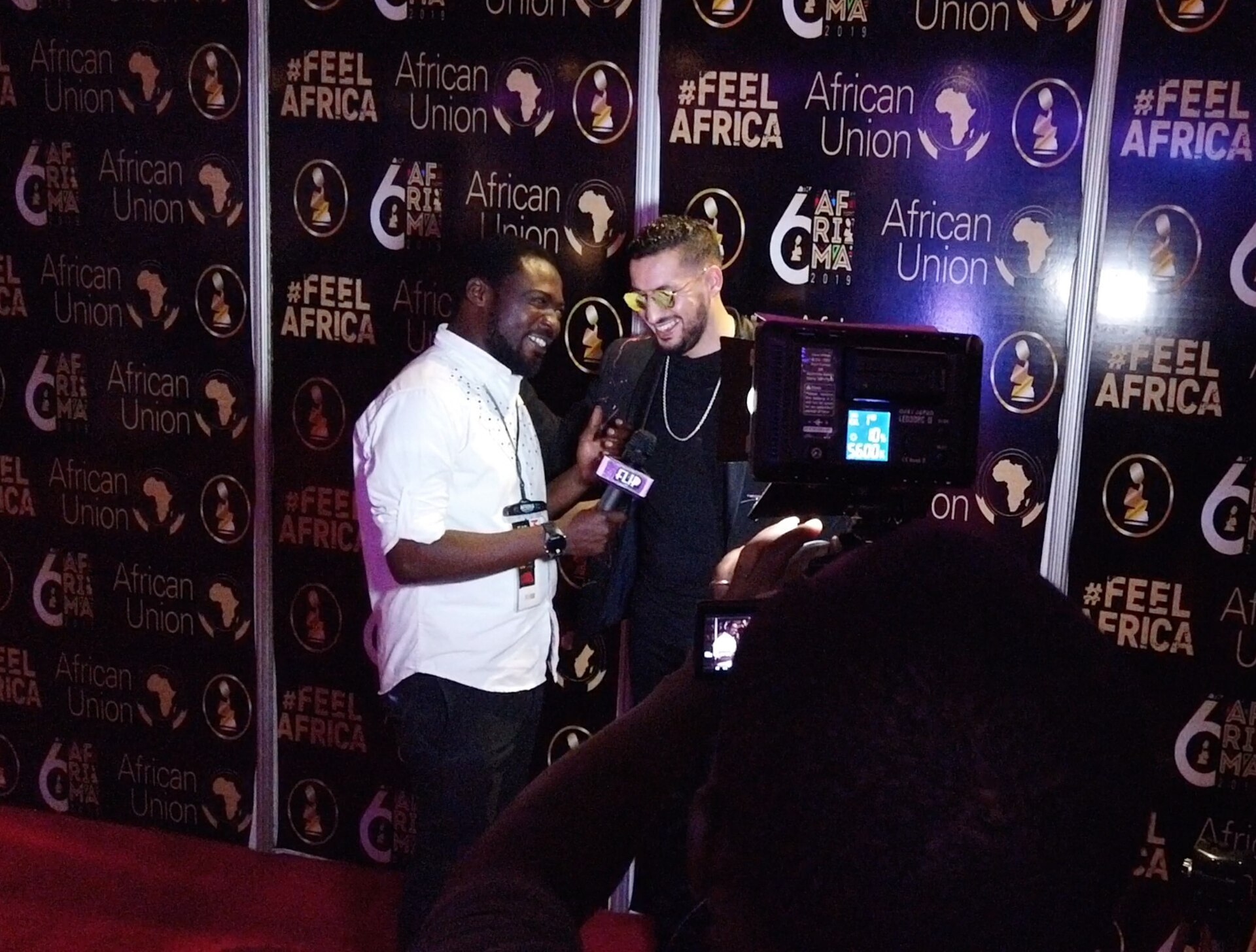
Photo: DJ Moh Green / Wikimedia Commons, CC BY-SA 4.0
AFRIMA is the main continental award run with a political partner. It was established in 2014 by the International Committee of AFRIMA in partnership with the African Union. It covers the whole continent, with regional categories that give artists from North, Central, East and Southern Africa a fair hearing.
FromPan-African
Founded2014
PartnerAfrican Union
Next showLagos, May 2027
The 9th AFRIMA was held from January 7 to 11, 2026, in Lagos, Nigeria. That put it straight after the Lagos festive season. If you are planning a Detty December trip to Lagos, it is worth checking whether a later AFRIMA edition falls inside your dates.
The build-up to the 10th edition has taken the team around the continent. There were activations in Dar es Salaam, Tanzania and Abidjan, Côte d’Ivoire before a Casablanca visit. The 10th AFRIMA global calendar was then unveiled in Los Angeles on September 20, 2026.
How AFRIMA entries and judging work
This is the one award on our list where artists submit their own work. The entry portal opened on October 11, 2026 and runs until January 10, 2027, and it is open to artists, songwriters and producers. Interest is high: the 9th edition received a record 10,717 submissions. An International Jury with members from each region then judges the entries. Kenya’s Lucy Ilado represents Eastern Africa, and our guide to Kenyan music explains why that region needs a voice on the panel. The 10th AFRIMA is scheduled for May 18–23, 2027, in Lagos.
Telecel Ghana Music Awards
Ghana’s main music awards have the most predictable schedule on this list. The last two editions were held on the second Saturday of May at the same venue. The 2026 edition was held on 9 May 2026 at the Grand Arena of the Accra International Conference Centre, recognising work from 2025. The 2025 show was held on 10 May 2025 at the same arena. TV3 broadcasts it in Ghana and Akwaaba Magic shows it outside the country.
Black Sherif won the top prize in 2026. He beat Medikal, Stonebwoy, Wendy Shay, Sarkodie and Diana Hamilton to win Artiste of the Year on the back of his album Iron Boy. At 24, he became the youngest artiste in the awards’ history to win the category twice.
How TGMA winners are chosen
In March 2026, the Ghana Music Award Academy Board announced the 27th TGMA nominees. The board has used its authority before. In one year it chose not to give Artiste of the Year to any nominee, which let the late dancehall star Ebony Reigns take that year’s spotlight.
Trace Awards
The Trace Awards are run by Trace, the music TV and streaming brand, and cover Africa and its diaspora with a strong focus on Afrobeats music. Editions have not followed a fixed yearly schedule. As of October 30, 2026, we have not confirmed the next edition’s date, host city or the most recent top-prize winner from official sources, so we have not listed them.
MTV Africa Music Awards (MAMAs)
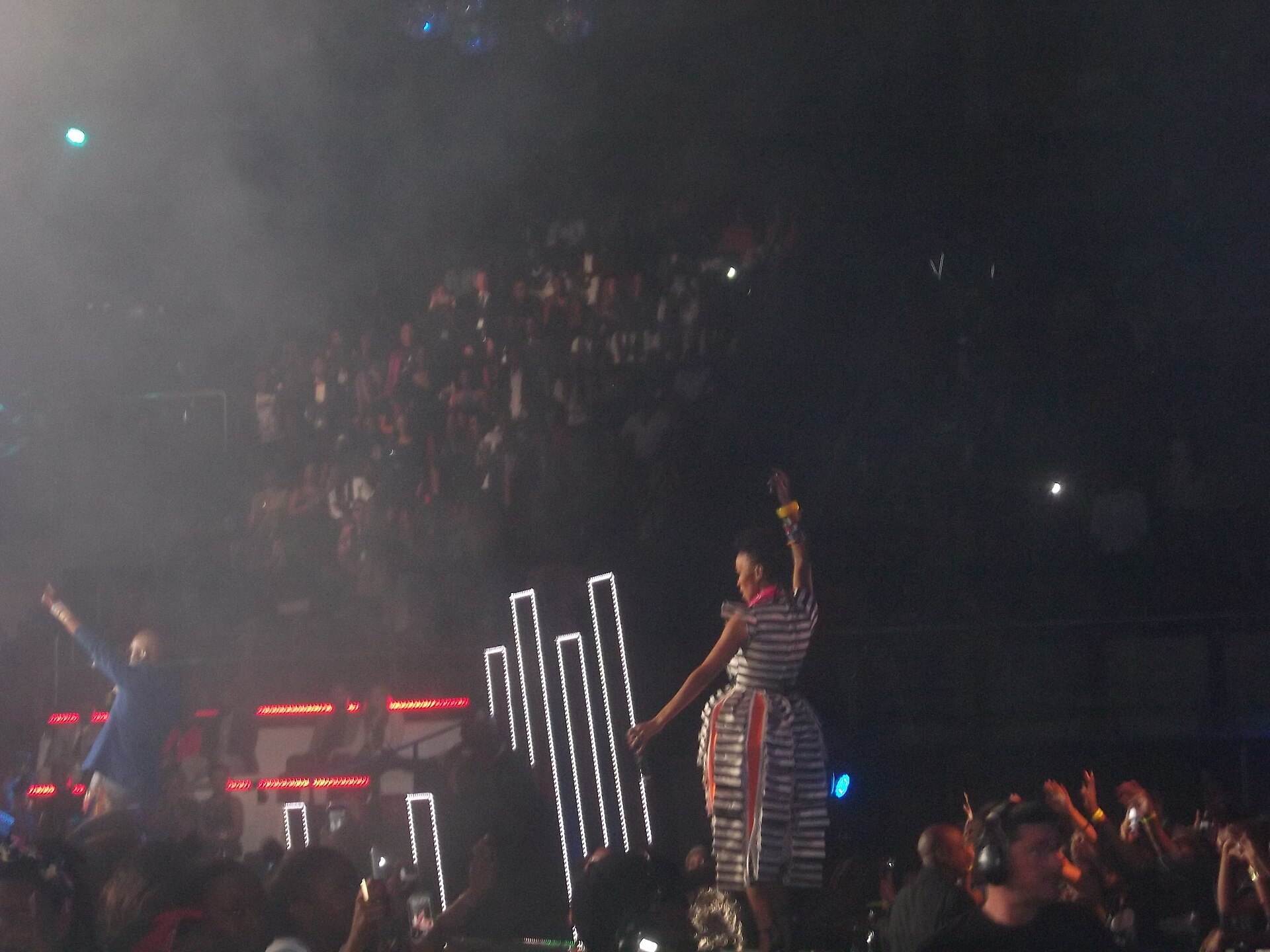
Photo: Akidjoh / Wikimedia Commons, CC BY-SA 3.0
The MAMAs were once the biggest televised African music awards. MTV has not staged them since the mid-2010s, and no revival had been announced when we checked. If you see an “MTV Africa awards” nominee list online, treat it with caution unless MTV itself has published it.
Grammys: Best African Music Performance
The Recording Academy created this category in 2024 to recognise recordings that showcase African music. Winners are chosen by the Academy’s voting members, not by sales or streams. Our explainer on the Grammy Best African Music Performance category covers the eligibility rules in detail.
Every winner so far has been a woman: Tyla with “Water” in 2024, Tems with “Love Me JeJe” in 2025 and Tyla with “Push 2 Start” in 2026. The 2026 award was presented at the 68th Grammys on February 1, 2026, at the Crypto.com Arena in Los Angeles. Tyla beat Burna Boy’s “Love”, Davido and Omah Lay’s “With You”, and Ayra Starr and Wizkid’s “Gimme Dat”, as well as Eddy Kenzo and Mehran Matin’s “Hope & Love”. For the story behind her first win, read Tyla Water Explained.
African music was also recognised outside the category that weekend. Fela Anikulapo Kuti was honoured posthumously with a Lifetime Achievement Award the night before.
BET Awards: Best International Act
Best International Act is the BET Awards category where African stars usually compete. Nigerian and South African artists often make the shortlist alongside acts from the UK, France and Brazil. The ceremony is normally held in the United States around June. We could not confirm the latest winner from official sources by October 30, 2026, so we have not named one.
How to read the African music awards calendar
Three patterns show up when you put these shows side by side:
Ghana is the most predictable. The TGMAs were held in early May at the same Accra venue in both 2025 and 2026.
Eligibility windows lag behind the charts. A song can win a Headies or SAMA well after it peaked, because the review periods can run longer than a year.
The shows are moving abroad. The Headies held its 18th edition in Toronto, and AFRIMA launched its 10th-edition calendar in Los Angeles. Organisers are clearly targeting diaspora audiences and international partners.
FAQ
What is the biggest African music award?
It depends on what you mean by biggest. AFRIMA is the largest by scope and entries, with African Union backing and over 10,000 submissions for its 9th edition. The Grammy for Best African Music Performance gets the most global media coverage.
When is the next AFRIMA?
The 10th AFRIMA is scheduled for May 18–23, 2027, in Lagos. Entries close on January 10, 2027.
Who has won the Grammy for Best African Music Performance?
Tyla won in 2024 and 2026, and Tems won in 2025. Tyla is the only artist to have won it twice.
Can artists enter these awards themselves?
For AFRIMA, yes, through its official entry portal. The Headies, SAMAs and TGMAs announce nominees through their own academies and judging panels after their eligibility periods close.
Are the MTV Africa Music Awards still running?
No. MTV has not held the MAMAs since the mid-2010s and had not announced a return as of October 30, 2026.
These 20 African songs span nine decades and more than a dozen countries. I picked tracks that changed what music sounded like, at home and abroad. Start at number one and work down, or jump straight to the scene you love.
How I Picked These Songs
Lists of Africa songs often lean only on recent Afrobeats hits. I wanted a wider net.
Every track here had to pass at least two of these tests:
Reach. It travelled beyond its home country.
Influence. Later artists borrowed from it.
Staying power. People still play it at weddings, clubs and family parties.
Scene value. It is a clear doorway into a genre.
I capped each artist at one song. Sorry, Fela fans.
Quick Reference Table
#
Song
Artist
Country
Year
Style
1
Pata Pata
Miriam Makeba
South Africa
1967 (US)
Xhosa pop
2
Sweet Mother
Prince Nico Mbarga
Nigeria/Cameroon
1976
Highlife
3
Water No Get Enemy
Fela Kuti
Nigeria
1975
Afrobeat
4
Mbube
Solomon Linda’s Evening Birds
South Africa
1939
Isicathamiya
5
Mario
Franco & TPOK Jazz
DR Congo
1985
Rhumba
6
Grazing in the Grass
Hugh Masekela
South Africa
1968
Jazz
7
Malaika
Fadhili William
Kenya
1960s
Zilizopendwa
8
Yé ké yé ké
Mory Kanté
Guinea
1987
Mande pop
9
Enta Omri
Umm Kulthum
Egypt
1964
Arabic classical
10
Sodade
Cesária Évora
Cape Verde
1992
Morna
11
7 Seconds
Youssou N’Dour & Neneh Cherry
Senegal
1994
Mbalax fusion
12
Agolo
Angélique Kidjo
Benin
1994
Afro-pop
13
Vulindlela
Brenda Fassie
South Africa
1997
Kwaito-pop
14
Premier Gaou
Magic System
Ivory Coast
1999
Zouglou
15
Yègellé Tezeta
Mulatu Astatke
Ethiopia
1970s
Ethio-jazz
16
Adonai
Sarkodie ft. Castro
Ghana
2014
Hiplife
17
Jerusalema
Master KG ft. Nomcebo Zikode
South Africa
2019
Afro-house
18
Essence
Wizkid ft. Tems
Nigeria
2020
Afrobeats
19
Calm Down
Rema
Nigeria
2022
Afrobeats
20
Water
Tyla
South Africa
2023
Amapiano-pop
The 20 Songs, Ranked
1. Pata Pata, Miriam Makeba (Top Pick)
This is my clear number one. Makeba first recorded it in South Africa in the 1950s. The 1967 US release reached No. 12 on the Billboard Hot 100.
The title means “touch touch” in Xhosa. It names a township dance. Makeba was in exile by then, banned from home. That gives the joyful tune a sharp edge.
FromJohannesburg, South Africa
GenreXhosa pop
US release1967
LabelReprise
2. Sweet Mother, Prince Nico Mbarga
A 1976 highlife tribute to mothers, sung in Pidgin. It still fills dance floors across West and Central Africa. Guitars ring. Everyone sings along.
3. Water No Get Enemy, Fela Kuti
Released in 1975 on Expensive Shit. The title is a Pidgin proverb: everyone needs water, so nobody fights it. Fela uses it as a warning to power. The horn lines are long and hypnotic.
4. Mbube, Solomon Linda’s Evening Birds
Recorded in 1939. “Mbube” means lion in Zulu. You know the melody from “The Lion Sleeps Tonight.” Linda earned almost nothing from it during his life. Hear the original first.
5. Mario, Franco & TPOK Jazz
Congolese rhumba at its peak. Franco tells a long story about a kept man. The 1985 song runs well past ten minutes. The guitar solo alone justifies every one.
6. Grazing in the Grass, Hugh Masekela
Masekela’s trumpet hit No. 1 on the Billboard Hot 100 in 1968. It is pure sunshine. Many Americans never knew an exiled South African played it.
7. Malaika, Fadhili William
“Malaika” is Swahili for angel. Kenyans file it under zilizopendwa, the “golden oldies” of East African rumba and twist. Authorship is still disputed. Miriam Makeba’s cover took it worldwide.
8. Yé ké yé ké, Mory Kanté
The Guinean kora player turned griot music into club music in 1987. It became a big hit across Europe. Remixes kept it alive through the 1990s.
9. Enta Omri, Umm Kulthum
Egypt’s greatest voice, recorded in 1964. Live versions stretch near an hour. Start with a shorter edit. Then lose an evening.
10. Sodade, Cesária Évora
A 1992 morna about longing for home. Évora sang barefoot. Her voice carries the whole emigrant story of Cape Verde.
11. 7 Seconds, Youssou N’Dour & Neneh Cherry
A 1994 duet in Wolof, French and English. It reached No. 3 on the UK Singles Chart. It was many Europeans’ first taste of Senegalese song.
12. Agolo, Angélique Kidjo
Kidjo’s 1994 plea to protect the earth. Funky, bright, still fresh. She has since won multiple Grammys.
13. Vulindlela, Brenda Fassie
From the 1997 album Memeza. South Africans play it at nearly every wedding. Fassie was the country’s biggest pop star. This proves why.
14. Premier Gaou, Magic System
“Gaou” is Ivorian street slang for a naive fool. The song mocks a woman who left the singer when he was broke. Zouglou went pan-African with this one.
15. Yègellé Tezeta, Mulatu Astatke
Ethio-jazz built on Ethiopian scales and Latin rhythm. Jim Jarmusch used Mulatu’s music in Broken Flowers. Play it late at night.
16. Adonai, Sarkodie ft. Castro
My hip-hop entry. Sarkodie raps in Twi with real speed. Castro’s hook made it a 2014 gospel-tinged smash in Ghana.
17. Jerusalema, Master KG ft. Nomcebo Zikode
Released in 2019. The Zulu hook calls Jerusalem home. In 2020 it sparked a global dance challenge. Nurses, priests and police all joined.
18. Essence, Wizkid ft. Tems
From Made in Lagos, 2020. The Justin Bieber remix took it to No. 9 on the Billboard Hot 100. Tems became a star overnight.
19. Calm Down, Rema
The Selena Gomez remix peaked at No. 3 on the Billboard Hot 100. It is one of the most-streamed African songs ever. The original is still better.
20. Water, Tyla
Released in 2023. It won the first Grammy for Best African Music Performance in 2024. My piece on Tyla water explains how it carried amapiano into pop. The Grammy Best African Music category explainer covers that award.
Listen next
After “Water,” play Kabza De Small to hear amapiano without the pop polish.
Beyond the 20: Scenes Worth Exploring
Bongo Flava (Tanzania)
Start with Diamond Platnumz, “Number One” (2013). Then try the remix with Davido. Bongo Flava blends Swahili lyrics, hip-hop and taarab melody.
Kenyan Sounds
Sauti Sol’s “Sura Yako” (2015) is the friendliest entry. For benga, go to D.O. Misiani and Shirati Jazz.
Vernacular scenes like Kikuyu benga and Kalenjin music run deep. They thrive on local radio and YouTube. I have not ranked a single track from them. Ask a Kenyan friend for a playlist instead.
Gqom and DJ Mixes
Durban’s gqom is dark and bass-heavy. Babes Wodumo’s “Wololo” (2016) brought it mainstream.
African dance music often lives in long mixes. Black Coffee’s sets are the gold standard. He won the Grammy for Best Dance/Electronic Album for Subconsciously in 2022.
Diaspora and Gospel
Stromae is Belgian with a Rwandan father. “Papaoutai” (2013) deals with an absent dad. Our Papaoutai lyrics translation unpacks it.
On the gospel side, Sinach’s “Way Maker” is sung in churches worldwide. If Nigeria pulls you in, Nigerian music history is the natural next read.
Myth
Toto’s “Africa” and “We Are the World” are not African songs. Toto were Los Angeles session musicians. The singers in USA for Africa were mostly American stars raising money for Ethiopian famine relief. Both are great records. Neither came from the continent.
FAQ
What is the most famous African song of all time?
“Pata Pata” has the strongest claim. “Mbube” is a close rival, mostly through its famous adaptation.
Which African song has done best on US charts?
Hugh Masekela’s “Grazing in the Grass” hit No. 1 on the Billboard Hot 100 in 1968.
What African music songs work best for a party?
Try “Sweet Mother,” “Vulindlela,” “Jerusalema” and “Calm Down.” All four cross generations.
Where should a beginner start with African songs?
Play the top five in order. You will hear South Africa, Nigeria and Congo in one sitting.
The Grammy Award for Best African Music Performance has been handed out three times, and Tyla has won it twice. This article explains how the category works, which songs have been nominated since it launched, who won each year, and how all 15 nominated recordings rank.
Last updated: October 29, 2026
AnnouncedJune 2023
First awardedFebruary 2024
FieldGlobal Music
Two-time winnerTyla
What the Best African Music Performance category is
The Recording Academy announced Best African Music Performance in June 2023, alongside two other new categories, Best Pop Dance Recording and Best Alternative Jazz Album. It was first presented at the 66th Grammy Awards in February 2024. It sits inside the Global Music field with Best Global Music Performance and Best Global Music Album.
The category rewards a single track, not an album. The Academy’s description says it honours recordings that use local musical expressions from across the African continent, drawing on regional melodic, harmonic and rhythmic traditions. The style examples the Academy listed when it announced the award included Afrobeat, Afrobeats, Afro-fusion, Afropop, Alté, Amapiano, Bongo Flava, Genge, Highlife, Fuji, Kwaito, Gqom, Kizomba and Chimurenga.
That range is wider than the nominee lists suggest. In three years the field has been dominated by Nigerian Afrobeats and South African amapiano-pop. A Bongo Flava record from Dar es Salaam, a Gengetone or Genge track rooted in Kenya music, a Congolese ndombolo cut or a recording drawn from the music of Ethiopia would all fit the brief on paper. None has reached the final five yet.
Before 2024, African artists competed for Grammys in the Global Music categories, where a Lagos club record could end up against Indian classical fusion, Latin crossover or South African choral music. Afrobeats music had grown into one of the most-streamed exports on the planet, yet it still had no category built around it. The new award fixed that by creating a lane where African popular music is measured against itself.
How a song becomes eligible and gets nominated
The Grammy process is more like a filter than a popularity contest. You cannot vote your favourite song in as a fan, and streaming numbers alone do not decide anything.
The path from release to nomination
Release inside the eligibility window. The track must be commercially released within that year’s period, which usually runs from late summer or early autumn of one year to late August or mid-September of the next.
Entry by a label or member. Labels, distributors and Recording Academy members submit entries. If an artist’s team does not enter a song, it cannot be nominated, no matter how big it was.
Screening. Panels of genre experts check that each entry belongs in the category. A song can be moved or removed if it does not fit.
First-round voting. Voting members choose the nominees. The Academy caps the number of categories a member can vote in outside the General Field, which steers voters toward the genres they know.
Final-round voting. Members vote again to pick the winner from the five nominees.
The award goes to the credited performing artists. Producers and songwriters are not named as recipients in this category. That matters for collaborations such as Asake and Olamide’s “Amapiano”, where both performers share the nomination.
Eligibility windows and ceremonies so far
Ceremony
Date held
Eligibility window
Winner
66th Grammy Awards
February 4, 2024
October 1, 2022 to September 15, 2023
“Water” by Tyla
67th Grammy Awards
February 2, 2025
September 16, 2023 to August 30, 2024
“Love Me JeJe” by Tems
68th Grammy Awards
February 1, 2026
August 31, 2024 to August 30, 2025
“Push 2 Start” by Tyla
The window explains some odd timing. “Push 2 Start” was released in October 2024 and won more than a year later. Songs that break in Lagos during Detty December land inside the following ceremony’s window, so a festive-season hit has to survive a full year of industry attention before voters see it.
So far, the category has been presented at the Premiere Ceremony, the afternoon show held before the main telecast where most Grammys are handed out. That is why many viewers in Lagos, Accra or Nairobi first see the result on social media rather than on the broadcast.
Every winner and nominee, year by year
2024: the first year (66th Grammys)
Song
Artist
Country of lead act
Result
“Water”
Tyla
South Africa
Won
“Amapiano”
Asake & Olamide
Nigeria
Nominated
“City Boys”
Burna Boy
Nigeria
Nominated
“Unavailable”
Davido featuring Musa Keys
Nigeria
Nominated
“Rush”
Ayra Starr
Nigeria
Nominated
Four of the five nominees were Nigerian, and many observers expected Burna Boy or Davido to take the first trophy. Tyla won instead with “Water”, which had already peaked at No. 7 on the Billboard Hot 100. She was widely reported as the youngest African solo artist to win a Grammy. The song also made her the first solo South African artist on the Hot 100 since Hugh Masekela’s “Grazing in the Grass” in 1968.
2025: Tems takes it for Nigeria (67th Grammys)
Song
Artist
Country of lead act
Result
“Love Me JeJe”
Tems
Nigeria
Won
“Tomorrow”
Yemi Alade
Nigeria
Nominated
“MMS”
Asake & Wizkid
Nigeria
Nominated
“Sensational”
Chris Brown featuring Davido & Lojay
United States
Nominated
“Higher”
Burna Boy
Nigeria
Nominated
Tems won with a song built around Seyi Sodimu’s 1997 Nigerian hit “Love Me Jeje”. It was her second Grammy. She had already won Best Melodic Rap Performance in 2023 as a featured artist on Future’s “Wait for U” with Drake. The Chris Brown nomination set off a lot of debate, and it proved a point many fans had missed: the category judges the music, not the passport.
2026: Tyla’s second win (68th Grammys)
Song
Artist
Country of lead act
Result
“Push 2 Start”
Tyla
South Africa
Won
“Hope & Love”
Burna Boy
Nigeria
Nominated
“Gimme Dat”
Ayra Starr & Wizkid
Nigeria
Nominated
“With You”
Davido featuring Omah Lay
Nigeria
Nominated
“Love”
Eddy Kenzo & Mehran Matin
Uganda
Nominated
Tyla became the first artist to win the category twice. The more important sign for the category’s future was Eddy Kenzo, the first Ugandan act to reach the final five. Kenzo had already made history in 2023 as the first Ugandan Grammy nominee, in Best Global Music Performance, so his return in the African category gave East Africa its first foothold in the new lane.
Myth
“Tyla is the first African artist to win a Grammy.” She is not. South African singer Miriam Makeba shared the Best Folk Recording Grammy with Harry Belafonte in 1966, and Nigerian-born Sade Adu’s band Sade won Best New Artist in 1986. Tyla was the first winner of this specific category, which is a different and still significant record.
Quick-reference: all 15 nominations at a glance
This table gathers every nomination so you can scan the field before reading the ranking.
Rank
Song
Artist
Ceremony
Sound
Result
1
“Water”
Tyla
2024
Amapiano-pop
Won
2
“Love Me JeJe”
Tems
2025
Afro-R&B, highlife roots
Won
3
“Rush”
Ayra Starr
2024
Afropop
Nominated
4
“Push 2 Start”
Tyla
2026
Amapiano-R&B
Won
5
“Unavailable”
Davido feat. Musa Keys
2024
Afrobeats-amapiano
Nominated
6
“City Boys”
Burna Boy
2024
Afro-fusion, hip-hop edge
Nominated
7
“Amapiano”
Asake & Olamide
2024
Street-pop amapiano
Nominated
8
“MMS”
Asake & Wizkid
2025
Afrobeats, street-pop
Nominated
9
“With You”
Davido feat. Omah Lay
2026
Mid-tempo Afrobeats
Nominated
10
“Love”
Eddy Kenzo & Mehran Matin
2026
East African pop
Nominated
11
“Gimme Dat”
Ayra Starr & Wizkid
2026
Afropop
Nominated
12
“Higher”
Burna Boy
2025
Afro-fusion
Nominated
13
“Tomorrow”
Yemi Alade
2025
Afropop
Nominated
14
“Hope & Love”
Burna Boy
2026
Afro-fusion
Nominated
15
“Sensational”
Chris Brown feat. Davido & Lojay
2025
R&B-Afrobeats crossover
Nominated
How we ranked the nominees
A ranking of Grammy nominees should judge the records, not repeat the voters’ results. Four tests decided where each song landed:
Rootedness. How clearly the song draws on a specific African sound, rhythm or language, which is what the category says it rewards.
Impact. Whether the song moved the culture, in clubs and on the street as well as on charts, in Africa and across the diaspora.
Craft. Production, vocal performance, hook writing and how the record holds up on a fifth listen.
Distinctiveness. Whether the song sounds like nobody else in its year, or like a strong version of a familiar formula.
Winning helped only indirectly. A song that won usually scored well on impact, but two winners sit outside the top two places.
The 15 nominees ranked
1. “Water” by Tyla (2024, won): top pick
“Water” is the reason this category has a story at all. Tyla took the log-drum bass and patient swing of amapiano, a sound born in Gauteng townships, and fitted it under a pop-R&B vocal light enough for American radio without diluting the rhythm. The song spread through a dance challenge, then held its place on the charts once the challenge faded, which is the harder part.
Its impact is the easiest to measure. A Hot 100 peak of No. 7 and a Grammy win took amapiano into rooms that had never heard of Pretoria or Soweto, and our piece on Tyla Water explains how the hit brings amapiano to pop in more detail. If you only play one song from this list to someone new to African music, play this one.
2. “Love Me JeJe” by Tems (2025, won)
Tems built her winner on a 1990s Lagos love song, and that choice is what lifts it. “Jeje” is a Yoruba word that carries the sense of gently or calmly, so the hook works as a request to be loved without drama. Her version keeps the warmth of the original and adds her low, unhurried voice, which makes the song feel personal rather than nostalgic.
It ranks second because it does something the category was designed to reward: it connects a current star to a specific Nigerian pop memory. Older listeners in Lagos heard Seyi Sodimu; younger listeners in London and Houston heard Tems. Both groups were right.
3. “Rush” by Ayra Starr (2024, nominated)
“Rush” is the best song on this list that did not win. Ayra Starr’s vocal sits on a bright, bouncing Afropop beat produced by London, and the hook is built to be shouted back by a crowd. The song became a confidence anthem for young fans, especially young women, across West Africa and the diaspora.
Its loss in 2024 says more about the strength of “Water” than about any weakness here. Ayra Starr was 20 when “Rush” came out, and the record announced a pop star with an ear for melody that most of her peers would envy.
4. “Push 2 Start” by Tyla (2026, won)
Tyla’s second winner is smoother and more R&B-leaning than “Water”. The amapiano influence is still there in the groove, but the song leans on mood and texture rather than an obvious drop. It took longer to catch on than her breakout hit, building through 2025 before the Grammy voting season arrived.
It ranks below “Rush” because it refines a formula rather than inventing one. That is not a knock on the song; it is a reminder of how much ground “Water” had already covered. Two wins in three years also show that voters respond strongly to a record that travels well beyond the continent.
5. “Unavailable” by Davido featuring Musa Keys (2024, nominated)
“Unavailable” is one of the clearest examples of the Lagos and Johannesburg scenes meeting halfway. Davido brings the Afrobeats swagger and South African vocalist Musa Keys brings the amapiano feel. In Nigerian slang, calling yourself unavailable means you are too busy, too successful or too in-demand to be reached, and the hook turns that boast into a party line.
The song was a centrepiece of Davido’s album “Timeless”, which also earned him nominations in Best Global Music Album and Best Global Music Performance that year. Three nominations and no wins in 2024 started a pattern Davido has not yet broken.
6. “City Boys” by Burna Boy (2024, nominated)
“City Boys” is Burna Boy at his most combative, with a harder, rap-influenced energy than his usual Afro-fusion. It came from “I Told Them…”, an album that leaned openly on hip-hop. The song is pure confidence, a celebration of urban life, money and status delivered in a mix of English and Pidgin.
It works best live, and Burna Boy performed it on the 2024 Grammys broadcast. It ranks sixth because its hip-hop leaning, while exciting, makes it less rooted in a distinct African sound than the songs above it.
7. “Amapiano” by Asake & Olamide (2024, nominated)
The title tells you exactly what Asake was doing in 2023: folding the South African sound into Nigerian street-pop, with call-and-response vocals drawn from Fuji and Yoruba party music. Olamide, the YBNL boss who signed Asake, joins as mentor and co-star, and their chemistry is the song’s main draw.
It sits at seven because it captured a real moment, when amapiano rhythms were reshaping Lagos production. It loses ground for borrowing its biggest idea openly, but the vocal arrangement still sounds like nobody but Asake.
8. “MMS” by Asake & Wizkid (2025, nominated)
“MMS” pairs two of Nigeria’s biggest voices on Asake’s album “Lungu Boy”. Asake’s choir-style hooks and Wizkid’s relaxed delivery should not fit together, and the friction is the point. It is a song for the second half of a night out, when the energy has peaked and the dancefloor slows down.
It ranks below “Amapiano” because the novelty of Asake’s sound had faded slightly by 2024. Still, it gave Wizkid his first nomination in this category, after his earlier Grammy win for Best Music Video on Beyoncé’s “Brown Skin Girl” in 2021.
9. “With You” by Davido featuring Omah Lay (2026, nominated)
“With You” comes from Davido’s 2025 album “5ive” and pairs him with Omah Lay, whose soft, melancholy tone has made him one of the most distinctive voices of his generation. The result is a mid-tempo love song with a warmer, more vulnerable feel than Davido’s party records.
It is a strong song held back by being a little too comfortable. The category has seen plenty of polished Afrobeats love songs, and this one does not change the shape of the genre. It did give Davido his third nomination in three ceremonies, which no other artist has matched without a win apart from Burna Boy.
10. “Love” by Eddy Kenzo & Mehran Matin (2026, nominated)
Eddy Kenzo’s nomination matters more than its ranking suggests. He built his career in Uganda, where his 2014 hit “Sitya Loss” became a viral sensation partly because of its video featuring street children dancing. Two Grammy nominations later, he is the clearest proof that the category can look beyond Lagos and Johannesburg.
“Love” lands in tenth place because, as a record, it made a smaller cultural impact than the Nigerian and South African hits above it. As a sign of where the category could go, it may be the most important nomination of 2026.
11. “Gimme Dat” by Ayra Starr & Wizkid (2026, nominated)
On paper, Ayra Starr and Wizkid should produce something special: a young pop star at her peak and a veteran who helped take Afrobeats global. The song is pleasant, well produced and easy to like.
It ranks here because it never reaches the urgency of “Rush”. It plays like a duet built for streaming playlists rather than for a crowd at a festival or a club, and in a category this crowded with Nigerian stars, that is not enough to stand out.
12. “Higher” by Burna Boy (2025, nominated)
“Higher” is a reflective, uplifting Burna Boy single about rising above struggle. The production is polished and his vocal is assured.
The problem is familiarity. By 2025, voters had heard many versions of Burna’s motivational mid-tempo mode, and “Higher” did not add much. It was a reasonable nomination for a major artist, but not one of his defining records.
13. “Tomorrow” by Yemi Alade (2025, nominated)
Yemi Alade has been one of Africa’s most travelled performers since “Johnny” in 2014, and her nomination recognised a long career of pan-African pop that crossed Francophone and Anglophone markets. “Tomorrow” is bright, upbeat and built around her big voice.
It ranks thirteenth because it plays safe compared with the records around it. The nomination is still welcome: Yemi Alade is one of only three women to reach the final five in this category, alongside Tyla, Tems and Ayra Starr.
14. “Hope & Love” by Burna Boy (2026, nominated)
From Burna Boy’s 2025 album “No Sign of Weakness”, “Hope & Love” carries the warm, positive themes the title promises. It is a well-made song with a big chorus.
It sits near the bottom for the same reason as “Higher”. Burna Boy has now been nominated in every year of the category’s life without winning, and his three entries have not been his strongest work. His Grammy win came earlier, when “Twice as Tall” took Best Global Music Album in 2021.
15. “Sensational” by Chris Brown featuring Davido & Lojay (2025, nominated)
“Sensational” is a well-produced crossover from Chris Brown’s album “11:11”, with Davido and Lojay bringing the Afrobeats sound. As a song, it is catchy and competent.
It ranks last because it is the only nomination led by an artist from outside Africa, in a category created to spotlight African-led music. The record is legal under the rules, which judge sound rather than nationality, but its nomination took a place that could have gone to an African act from a scene not yet represented.
Listen next
After “Water”, play Tems’ “Love Me JeJe” and then Seyi Sodimu’s 1997 original. The three songs show how African pop memory travels across decades and borders.
Who has been nominated most
Artist
Nominations in category
Wins
Songs
Burna Boy
3
0
“City Boys”, “Higher”, “Hope & Love”
Davido
3
0
“Unavailable”, “Sensational”, “With You”
Tyla
2
2
“Water”, “Push 2 Start”
Asake
2
0
“Amapiano”, “MMS”
Wizkid
2
0
“MMS”, “Gimme Dat”
Ayra Starr
2
0
“Rush”, “Gimme Dat”
Tems
1
1
“Love Me JeJe”
Olamide, Musa Keys, Yemi Alade, Chris Brown, Lojay, Omah Lay, Eddy Kenzo, Mehran Matin
1 each
0
One credit each
Burna Boy and Davido are the two biggest names in African music never to win the category they dominate in nominations. Tyla has a perfect record. That contrast is the most important storyline of the award’s first three years.
Why South Africa keeps winning with fewer nominees
Count the nominations: 11 of the 15 nominated songs were led by Nigerian acts, two by Tyla, one by Eddy Kenzo of Uganda and one by Chris Brown. Yet Nigeria has won only once.
Three reasons stand out.
Vote splitting
When four strong Nigerian nominees appear in the same category, voters who love Nigerian Afrobeats spread their support across several songs. A single South African nominee with mainstream crossover can then win with a smaller but more concentrated vote. Voters do not coordinate, so this effect is real in any category with a dominant country.
The crossover factor
Most Grammy voters live and work in the American music industry. “Water” and “Push 2 Start” were both American hits before the voting began. A song that has already reached U.S. radio and playlists starts with name recognition that a Lagos street record cannot match, however big it is at home.
The novelty of amapiano
For many American voters in 2023 and 2024, amapiano was the newest, most distinctive sound in the field. Afrobeats was by then familiar. A voter looking for the record that sounds most unlike everything else in the Grammys could easily choose Tyla’s.
None of this is a criticism of the winners, both of whom earned their trophies. It does mean the category’s results have tracked American visibility at least as much as African popularity, which is something to keep in mind when you compare them with continental awards such as the Headies.
How the category fits with the other Global Music awards
The new award sits beside two older categories, and African artists can still compete in all three.
Category
First awarded
What it rewards
Notable African-related winners
Best African Music Performance
2024
A single track rooted in African musical traditions
Tyla (2024, 2026), Tems (2025)
Best Global Music Performance
2022
A single track in any non-Western or global tradition
“Bayethe” by Wouter Kellerman, Zakes Bantwini & Nomcebo Zikode (2023)
Best Global Music Album
Under this name since 2021 (formerly World Music Album)
A single song can be entered in only one of the two Global Music performance categories, so an artist’s team has to decide where it has the best chance. A song that feels clearly African tends to go into the African category. A collaboration across regions or a more experimental record can make more sense in Best Global Music Performance.
Africa at the Grammys before 2024
The new category built on a long history. These milestones show how African artists and those of African heritage reached the Grammys before the dedicated award existed.
Year
Artist
Category
Work
1966
Miriam Makeba (with Harry Belafonte)
Best Folk Recording
“An Evening with Belafonte/Makeba”
1986
Sade
Best New Artist
Band fronted by Nigerian-born Sade Adu
1988
Ladysmith Black Mambazo
Best Traditional Folk Recording
“Shaka Zulu”
2008
Angélique Kidjo
Best Contemporary World Music Album
“Djin Djin”
2021
Burna Boy
Best Global Music Album
“Twice as Tall”
2021
Wizkid (with Beyoncé, Blue Ivy Carter and Saint Jhn)
Best Music Video
“Brown Skin Girl”
2022
Black Coffee
Best Dance/Electronic Album
“Subconsciously”
2023
Tems (with Future and Drake)
Best Melodic Rap Performance
“Wait for U”
2023
Wouter Kellerman, Zakes Bantwini & Nomcebo Zikode
Best Global Music Performance
“Bayethe”
Ladysmith Black Mambazo and Angélique Kidjo each won five Grammys, which still sets the bar for African artists at the awards. Kidjo’s 2020 win for “Celia” came over Burna Boy’s “African Giant”, a result that helped fuel the conversation about whether one global category could fairly judge African pop.
What the category has not done yet
The first three years revealed some clear gaps. These are the storylines worth watching.
No Ghanaian nominee. Accra has a deep scene, from highlife to Afrobeats and Ghanaian drill, but no Ghanaian act has reached the final five.
No Francophone or Lusophone nominee. Artists from Côte d’Ivoire, the Democratic Republic of Congo, Senegal, Angola and Mozambique, where coupé-décalé, ndombolo, kuduro and kizomba thrive, have not broken through.
No North African nominee. The Academy named Gnawa among the eligible traditions, yet Moroccan, Algerian and Egyptian artists remain absent.
East Africa only once. Eddy Kenzo’s 2026 nomination was a first. Bongo Flava from Tanzania and Kenyan Gengetone, two of the region’s biggest exports, are still waiting.
No Nigerian men have won. Burna Boy, Davido, Wizkid, Asake and Olamide account for most nominations and no wins.
These gaps reflect who gets entered and who already has Academy voters’ attention. Recording Academy leadership has spoken publicly about growing its membership on the continent, and a more African voting body would almost certainly widen the field. Until then, a scene’s ability to manage the entry process, through labels, distributors and members who know the rules, matters nearly as much as its music.
The 2027 Grammys: what is known
As of October 29, 2026, the Recording Academy has not announced the nominations for the 69th Grammy Awards. Nominations are usually revealed in November, with the ceremony in early February, but the specific dates and the eligibility window for the 2027 show have not been confirmed in the sources available to us. We will not guess at nominees.
When the list arrives, look at three things. First, whether Burna Boy or Davido returns for a fourth nomination and whether either finally wins. Second, whether a Ghanaian, Francophone or East African act breaks into the final five. Third, whether a South African record again uses American crossover success to beat a crowded Nigerian field.
FAQ
Who won the first Grammy Award for Best African Music Performance?
Tyla won the first award at the 66th Grammy Awards on February 4, 2024, for “Water”. She beat Asake and Olamide, Burna Boy, Davido featuring Musa Keys, and Ayra Starr.
Who has won Best African Music Performance the most?
Tyla, with two wins: “Water” in 2024 and “Push 2 Start” in 2026. Tems is the only other winner, for “Love Me JeJe” in 2025.
Has Burna Boy ever won Best African Music Performance?
No. Burna Boy has been nominated in all three years, for “City Boys”, “Higher” and “Hope & Love”, without winning. His Grammy win came in 2021, when “Twice as Tall” took Best Global Music Album.
Can non-African artists be nominated?
Yes. The category judges whether a recording draws on African musical traditions, not the artist’s nationality. Chris Brown was nominated in 2025 for “Sensational”, featuring Davido and Lojay.
Has Davido won a Grammy?
Not as of October 29, 2026. Davido has three nominations in this category (“Unavailable”, “Sensational” and “With You”) and earned additional nominations in the Global Music categories in 2024.
Which countries have produced nominees?
Nigeria leads by a wide margin, with 11 of the 15 nominated songs. South Africa has had two (both Tyla’s, with Musa Keys also credited on Davido’s “Unavailable”), Uganda one through Eddy Kenzo, and the United States one through Chris Brown.
Is the category shown on the main Grammys broadcast?
So far, it has been presented at the Premiere Ceremony, the afternoon event held before the main telecast where most categories are announced. The Academy streams that ceremony online.
Tabu Ley Rochereau was the Congolese singer, songwriter and bandleader who helped turn rumba into Africa’s most influential pop sound between the 1960s and 1980s. His clarion, honeyed baritone, his bands African Fiesta and Afrisa International, and his landmark 1970 concert at the Paris Olympia made him a giant of the golden age. If you searched “tabuley” as one word, this is the same artist.
FromBagata, Congo
GenreCongolese rumba
BreakoutEarly 1960s
BandAfrisa International
Who Tabu Ley Was
He was born Pascal-Emmanuel Sinamoyi Tabu. Most sources give 1940 as his birth year, and some give 1937. As a schoolboy in Léopoldville (now Kinshasa), he earned the nickname Rochereau. He used it for decades until Mobutu’s authenticité campaign pushed Zairians to drop European names. He then became Tabu Ley, and fans added the honorific Seigneur.
Myth
Many listeners assume Rochereau was a family name. It was a school nickname taken from Pierre Denfert-Rochereau, a French colonel who led the defence of Belfort in 1870–71. It had nothing to do with his ancestry.
Career Timeline
1959: Joins Joseph “Grand Kallé” Kabasele’s African Jazz, the band behind “Indépendance Cha Cha.” This was his apprenticeship.
1963: Leaves with guitarist Docteur Nico (Nicolas Kasanda) to form African Fiesta. Their partnership produced some of the era’s most liked records.
Mid-1960s: The pair split. Nico runs African Fiesta Sukisa, and Rochereau leads African Fiesta National.
1970: In December, he plays the Paris Olympia, becoming the first sub-Saharan African artist to perform there and the second African artist overall, after Egyptian singer Umm Kulthum. The same year, his band becomes Afrisa International.
Early 1970s: He adopts the name Tabu Ley under authenticité.
Early 1980s: Mbilia Bel joins Afrisa. Their duets become a second golden run.
Late 1980s: He goes into exile abroad as political pressure in Zaire grows.
1997: He returns after Mobutu’s fall and serves in Laurent-Désiré Kabila’s government.
2013: He dies in Brussels on 30 November after years of ill health following a stroke.
Why His Music Still Matters
I hear three things that set Tabu Ley apart from his peers.
The first is the voice. Franco’s TPOK Jazz had grit and swagger. Rochereau sang with a lightness that made even sad songs float.
The second is staging. He brought a drum kit and dancers into rumba shows built for theatres, and the Olympia date proved Congolese music could sell to an international audience on its own terms.
The third is talent spotting. Sam Mangwana sang with him early on, and Mbilia Bel became a star through Afrisa. Guitarists like Michelino Mavatiku shaped the band’s sound.
The rhythmic DNA of that era runs straight into modern West African pop. Our explainer on what Afrobeats music is and where it came from covers that lineage in more detail.
Best Songs to Start With
“Mokolo Nakokufa”: The title means roughly “the day I die.” He imagines how different people will react to his death, and it is witty and morbid at once.
“Pitié”: A pleading love song that shows off his tenor.
“Muzina”: One of his signature tracks and a staple of his compilations.
“Kaful Mayay”: A gorgeous, slow-building Afrisa recording.
“Nakei Nairobi”: A duet with Mbilia Bel that nods to his huge East African following.
“Sorozo”: Pure dance-floor rumba with a long guitar section.
Essential Albums
Album
Label
Why it matters
The Voice of Lightness (Vol. 1 and 2)
Sterns Africa
The best consolidated overview of his 1960s and 1970s peak
Babeti Soukous
Real World (1989)
A live-in-studio set aimed at world music listeners
These compilations are the easiest way to hear the early catalogue. The original singles were scattered across many labels and are hard to find on vinyl.
Milestones and Honours
Year
Milestone
1970
Headlines the Paris Olympia
1997
Appointed to Congo’s government after returning from exile
2021
UNESCO inscribes Congolese rumba as intangible cultural heritage
The 2021 UNESCO listing recognised the genre as a whole rather than him personally. Still, I can’t think of anyone whose passion did more to earn it. Obituaries credit him with writing songs numbering in the thousands, though no exact count has ever been verified.
Listen next
Put on Franco and TPOK Jazz’s “Mario” to hear the rival school of golden-age rumba.
Similar Artists
If Tabu Ley clicks for you, try these next:
Franco Luambo Makiadi: His great rival.
Docteur Nico: His former partner, known for brilliant guitar work.
Grand Kallé: The bandleader who gave him his start.
Sam Mangwana and Mbilia Bel: Two singers who came up through his bands.
Papa Wemba: A star of the next generation, through Zaïko Langa Langa and Viva La Musica.
For another golden age that grew up in parallel, our guide to the music of Ethiopia, from azmari traditions to Ethio jazz, is a good companion read.
FAQ
Is “tabuley” the same as Tabu Ley?
Yes. “Tabuley” is a common search spelling of Tabu Ley, the name the artist adopted in the early 1970s. Earlier records credit him as Rochereau or Tabu Ley Rochereau.
What instruments did his bands use?
His bands used interlocking electric guitars, bass, a horn section and percussion. Under Tabu Ley, the drum kit also became standard.
Nigeria’s music runs from Yoruba talking drums, Igbo highlife and Hausa praise singing through jùjú, fuji and Fela Kuti’s Afrobeat, to the afrobeats and afro-pop wave led by Wizkid, Burna Boy, Davido, Tems and Rema. Today it is the most commercially powerful popular music made in Africa. Below, I trace how each era and genre fed the next and name the songs that marked every turn.
Last updated: October 29, 2026
Core languagesYoruba, Igbo, Hausa, Pidgin
Music capitalLagos
Biggest exportAfrobeats
First Grammy win2021
What makes music in Nigeria different
Nigeria has more than 200 million people and more than 500 living languages, so I never treat Nigerian music as one sound. It is a crowded marketplace of regional traditions that have borrowed from each other for a century.
Three large cultural blocs shape most of what reaches the charts. The Yoruba southwest has drum-led party music. The Igbo southeast has guitar-heavy highlife. The Hausa-Fulani north has a long line of court musicians and praise singers. Edo, Ijaw, Efik, Tiv, Urhobo and dozens of other communities add their own instruments, rhythms and dialects.
Nigerian Pidgin ties all of this together. Because a kid in Kano, a trader in Onitsha and a student in Ibadan can all follow it, Pidgin became the commercial language of pop. That explains why a single line can hop from Yoruba to Pidgin to English without losing anyone.
The other constant is Lagos. Since colonial times it has been the place where record labels, radio, nightclubs, owambe parties and, more recently, streaming-era studios cluster. Most of the genres below were either born in Lagos or had to win Lagos to go national.
Traditional foundations: drums, praise and ceremony
Before records, music in Nigeria was functional: it accompanied naming ceremonies, funerals, harvests, kingship rites and religious worship. Much of what sounds like pure entertainment in modern African music from Nigeria still carries that ceremonial DNA.
In Yorubaland the dùndún, the hourglass-shaped talking drum, imitates the rising and falling tones of the Yoruba language. A skilled drummer can “speak” praise names and proverbs. The bàtá drum ensemble, tied to the worship of Ṣàngó, supplies faster, sharper patterns. Both survive in jùjú, fuji and a surprising number of current afrobeats productions.
Igbo music leans on the ogene (a metal gong), the ekwe (a slit drum), and the udu (a clay pot drum). The interlocking bell patterns of ogene music carried straight into the guitar lines of eastern highlife. In the late 2010s and 2020s, Igbo pop artists brought those patterns back into the mainstream again.
Hausa tradition revolves around professional praise singers and court musicians. The long kakaki trumpets herald emirs, the goje fiddle and kuntigi lute accompany storytellers, and singers such as Mamman Shata, Dan Maraya Jos and Barmani Choge became household names across the north on radio. Northern pop today, including the songs that soundtrack Kannywood films, still borrows from that praise-singing tradition.
Nigerian music timeline at a glance
Era
What dominated
Key names
1920s to 1940s
Palm-wine guitar, early jùjú, church music
Tunde King, Irewolede Denge
1950s to 1960s
Dance-band highlife
Bobby Benson, Victor Olaiya, Rex Lawson
Late 1960s to 1970s
Jùjú, Afrobeat, eastern guitar highlife
I.K. Dairo, Ebenezer Obey, King Sunny Adé, Fela Kuti
1970s to 1980s
Fuji, Afro-funk, boogie, reggae
Sikiru Ayinde Barrister, William Onyeabor, Sonny Okosun, Majek Fashek
1990s
Industry collapse, early hip-hop and galala
The Remedies, Trybesmen, Daddy Showkey
2000s
Naija pop boom
2face Idibia, D’banj, P-Square, 9ice, M.I
2010s
Afrobeats goes global
Wizkid, Davido, Burna Boy, Olamide, Tiwa Savage
2020s
Grammys, stadiums, amapiano fusions, alté
Tems, Rema, Asake, Ayra Starr
Highlife: the first national pop sound
Highlife reached Nigeria from Ghana. Big-band leaders such as E.T. Mensah toured Lagos in the 1950s, and Nigerian bands quickly built their own versions, mixing brass, guitars and ballroom rhythms with local melody.
Myth
Highlife is often described as a Nigerian invention. It took shape in the Gold Coast (now Ghana) first, and Nigerian musicians then built a distinct eastern guitar style of their own that became just as influential.
Bobby Benson ran one of the most influential Lagos dance bands of the 1950s. Victor Olaiya, the “Evil Genius of Highlife,” led the Cool Cats, a band in which a young Fela Ransome-Kuti sang and played before founding his own groups. Olaiya’s “Baby Jowo” later returned for a new generation through a remake with 2Baba.
Cardinal Rex Lawson, from the Niger Delta, wrote some of the most enduring highlife songs of the 1960s, including “Sawale.” Victor Uwaifo, from Benin City, scored a national smash with “Joromi” and pushed the guitar to the front of the band.
The Nigerian Civil War of 1967 to 1970 split the scene. Many Igbo musicians left Lagos for the east, and there they built a stripped-down, guitar-driven style. That style produced Celestine Ukwu’s philosophical “Ije Enu,” Oliver De Coque’s dense guitar workouts and Chief Stephen Osita Osadebe’s 1984 classic “Osondi Owendi.”
Then there is “Sweet Mother,” the 1976 tribute to motherhood by Cameroonian-Nigerian bandleader Prince Nico Mbarga and Rocafil Jazz. Sung in Pidgin over bright, happy guitars, it became one of the most widely played songs in African history. I still hear it at parties in London and Houston where nobody under thirty knows who recorded it.
Highlife never died. In the 2010s Flavour revived eastern highlife for clubs with “Nwa Baby (Ashawo Remix),” and much of today’s afro-pop still uses highlife’s guitar phrasing and melody even when the beats are electronic.
Jùjú and the Lagos party circuit
Jùjú grew out of 1920s and 1930s Lagos palm-wine guitar music. Tunde King is usually credited as its first star. By the 1950s and 1960s, I.K. Dairo had added accordion and talking drum and become the first Nigerian musician honoured with an MBE, in 1963.
The genre exploded once the civil war pushed highlife out of Lagos. Two bandleaders defined its golden age. Chief Commander Ebenezer Obey built a smooth, proverb-rich style he called miliki. King Sunny Adé brought pedal steel guitar, layered talking drums and long, hypnotic dance suites.
Jùjú was built for the owambe, the lavish Yoruba party where guests “spray” banknotes on performers. Bandleaders sang praise for wealthy patrons by name, and that economy shaped how songs were structured: long, open grooves that could stretch for as long as the money kept coming.
King Sunny Adé took jùjú abroad. Island Records released his album Juju Music internationally in 1982, and it earned him a Grammy nomination. For many Western listeners, KSA was the first Nigerian star they saw live.
In the late 1980s Sir Shina Peters gave the genre a faster, flashier edge with his “Afro-juju” sound on the album Ace. Obey eventually moved toward gospel ministry, a path many Nigerian secular stars have followed.
Apala, sakara, waka and fuji: the Yoruba Muslim line
A second Yoruba tradition grew from Islamic practice rather than church or dance-hall culture. Apala, led by Haruna Ishola, used talking drums, shekere and agidigbo (a thumb piano) to back long, philosophical vocal lines. Sakara, associated with Yusuf Olatunji, was earthier and more percussive.
Waka is a vocal style rooted in Muslim women’s singing. Salawa Abeni, crowned the “Queen of Waka,” and Batile Alake carried it into the record era, and it remains one of the few traditional genres where women led from the front.
Fuji grew from were, the music young men performed to wake the faithful for the pre-dawn meal during Ramadan. Sikiru Ayinde Barrister shaped it into a full commercial genre and gave it the name. His long rivalry with Ayinla Kollington defined Yoruba street music through the 1970s and 1980s.
Fuji has kept regenerating. Wasiu Ayinde Marshal, known as K1 De Ultimate, became its dominant star from the 1990s on, followed by Pasuma and Saheed Osupa. In the 2020s, Asake openly built his sound on fuji vocal phrasing laid over amapiano log drums. I think that hybrid is the clearest proof that the old Lagos street sound still powers the newest one.
Fela Kuti and Afrobeat
Fela Kuti. Photo: Wikimedia Commons
Fela Anikulapo Kuti began as a highlife-jazz musician with his band Koola Lobitos. A 1969 trip to the United States changed him. He met Sandra Izsadore, read Black Power writing and heard James Brown’s funk as a political statement.
Back in Lagos he renamed his band Nigeria 70, then Africa 70, and fused highlife, jùjú rhythm, jazz horns and funk into Afrobeat. Drummer Tony Allen built the music’s rolling, polyrhythmic engine. Fela sang in Pidgin so his attacks on corruption, military rule and colonial thinking could reach the whole country.
Songs stretched past ten minutes. “Water No Get Enemy” (1975) uses a proverb about water’s power to say that nobody can fight what everyone needs. “Zombie” mocked soldiers who follow orders without thinking. The military answered in February 1977 with a brutal raid on Fela’s commune, the Kalakuta Republic. His mother, the activist Funmilayo Ransome-Kuti, was thrown from a window during the attack and died the following year. Fela responded later with “Coffin for Head of State.”
Afrobeat ran parallel to other African experiments of the period: Ethio-jazz in Addis Ababa, a story worth reading alongside the music of Ethiopia, and Manu Dibango’s Soul Makossa from neighbouring Cameroon, which reached American dancefloors in the early 1970s.
Fela died on August 2, 1997. His sons Femi Kuti and Seun Kuti (who still leads Fela’s later band, Egypt 80) have kept the sound alive and collected Grammy nominations, and the Broadway musical FELA! introduced him to theatre audiences in 2009. His club, the Shrine, continues in Lagos as the New Afrika Shrine.
Myth
Afrobeat and afrobeats are often treated as the same genre. Afrobeat is Fela’s 1970s fusion of funk, jazz and Yoruba rhythm, built on long instrumental jams. Afrobeats (with the s) is the umbrella term for 2000s-onward Nigerian and Ghanaian pop, shorter and dance-led. They are related, but they are not the same thing.
The 1970s and 1980s: funk, boogie and reggae
The oil-boom 1970s gave Nigeria money, nightlife and an appetite for imported rock, soul and disco. Bands such as BLO, The Funkees and Ofege made Afro-rock, while Christy Essien-Igbokwe and the Lijadu Sisters brought powerful female vocals into pop.
William Onyeabor recorded strange, synth-heavy funk records such as “Fantastic Man” on his own label in Enugu. They sold modestly at the time and were rediscovered decades later by Western crate-diggers and reissue labels.
Sonny Okosun mixed rock, reggae and highlife into his “ozzidi” sound and used it to support liberation movements in southern Africa on songs like “Papa’s Land” and “Fire in Soweto.” Onyeka Onwenu, a singer and broadcaster, scored with “One Love” and became one of the most respected voices of the decade.
Majek Fashek gave Nigeria its biggest reggae moment with “Send Down the Rain,” a prayer for rain that became a national anthem of sorts in the late 1980s. Ras Kimono and Evi Edna Ogholi followed with their own reggae hits.
The 1990s: collapse and rebuild
The 1980s Structural Adjustment Programme crushed the naira, and imported equipment and vinyl became unaffordable. Multinationals that had pressed Nigerian records for decades, including EMI, Decca and Polygram, scaled back or left. Piracy filled the gap, and live-band culture shrank under military rule and night curfews.
Two policy changes laid the groundwork for a revival. Broadcasting deregulation in the early 1990s licensed private stations, starting with Ray Power FM in 1994 and later Lagos stations such as Cool FM. Those stations needed local content and gave young acts airtime state radio rarely did.
The music of that decade was cheap to make and young in spirit. The Remedies, a trio of Tony Tetuila, Eedris Abdulkareem and Eddy Montana, had a street hit with “Shakomo.” Daddy Showkey popularised galala, a ragga-influenced Lagos ghetto sound. Trybesmen and Junior & Pretty pushed early Nigerian hip-hop. Kennis Music, founded by Kenny Ogungbe and Dayo Adeneye, became the label that turned this scene into a business.
The 2000s: the Naija pop boom
Civilian rule returned in 1999, and with it came a confident new pop scene built on cheap digital production, private radio, music videos and, from the mid-2000s, pan-African TV channels such as MTV Base Africa and Channel O.
2face Idibia (later 2Baba) left the boy band Plantashun Boiz and released “African Queen” in 2004. The acoustic love song travelled across the continent and onto the soundtrack of the 2006 American comedy Phat Girlz. I would call it the first record of the afrobeats era.
Producer Don Jazzy and singer D’banj launched Mo’ Hits Records in 2004 and built a string of hits on Don Jazzy’s synth-heavy beats. Twin brothers P-Square turned slick R&B harmonies and dance routines into a pan-African brand. Styl-Plus scored a radio staple with “Olufunmi.” Asa released her soulful 2007 debut, home to “Jailer,” and found a large following in France.
9ice made Yoruba proverbs cool again with “Gongo Aso” in 2008. That same year Jos rapper M.I Abaga released Talk About It on Chocolate City, and tracks like “Safe” proved that Nigerian hip-hop could sell albums. The Headies awards, launched in 2006 as the Hip Hop World Awards, gave the scene its own industry ceremony.
The 2010s: afrobeats goes global
The new decade arrived with three young stars. Wizkid’s “Holla at Your Boy” (2010) on Empire Mates Entertainment introduced a teenage singer with a light, melodic voice. Davido, son of a billionaire businessman, broke through with “Dami Duro” in 2011. Burna Boy surfaced with “Like to Party” in 2012.
D’banj signed with Kanye West’s GOOD Music in 2011, and “Oliver Twist” reached No. 9 on the UK Singles Chart in 2012. In London, DJ Abrantee is widely credited with popularising the label “afrobeats” around 2011 as a catch-all for this Nigerian and Ghanaian club music.
Mo’ Hits split in 2012. Don Jazzy founded Mavin Records, which became home to Tiwa Savage and, later, Rema and Ayra Starr. Olamide launched YBNL the same year and turned indigenous-language street rap into the biggest sound in the country, with hits like “Shakiti Bobo.” Ice Prince, Phyno and Flavour proved that rapping and singing in Yoruba, Igbo and Pidgin was a strength.
Wizkid’s “Ojuelegba” (2014), named after the Lagos district where he grew up, told a struggle-to-success story so plainly that Drake and Skepta jumped on a remix. In 2016 Wizkid featured on Drake’s One Dance, which spent ten weeks at No. 1 on the Billboard Hot 100 and pushed Nigerian rhythm onto global playlists.
Davido’s “Fall” (2017) became a slow-burning international hit and was later certified Gold by the RIAA. Burna Boy’s “Ye” (2018) blew up worldwide, helped in part by listeners who reportedly streamed it while searching for Kanye West’s album of the same name. Yemi Alade’s “Johnny” (2014) became one of the most-watched African music videos of its time, and Tiwa Savage won Best African Act at the 2018 MTV EMAs, the first woman to take that prize.
By the close of the decade, a separate “street-pop” wave had emerged. Zlatan’s “Zanku” dance and the music around it ruled Lagos parties, while alté artists such as Odunsi (The Engine), Lady Donli and Cruel Santino built an experimental, fashion-forward scene. Santino’s “Rapid Fire” with Skepta became its signature track.
The 2020s: Grammys, stadiums and amapiano
Global recognition arrived fast. In March 2021, Burna Boy’s Twice as Tall won Best Global Music Album at the 63rd Grammys, and Wizkid won Best Music Video for Beyoncé’s “Brown Skin Girl,” on which he featured.
Wizkid’s Made in Lagos (October 2020) produced “Essence” with Tems. The Justin Bieber remix reached No. 9 on the Billboard Hot 100, a first for a Nigerian song. When Billboard launched its U.S. Afrobeats Songs chart in March 2022, the UK Official Afrobeats Chart (launched July 2020) and Nigeria’s own TurnTable Top 100 (launched 2020) were already tracking the boom closely.
Tems became the decade’s breakout voice. She featured on Future’s “Wait for U” alongside Drake, which went to No. 1 on the Hot 100 in 2022 and won Best Melodic Rap Performance at the 2023 Grammys. She co-wrote Rihanna’s “Lift Me Up” for Black Panther: Wakanda Forever, which earned an Academy Award nomination for Best Original Song. In February 2025 her “Love Me JeJe” won Best African Music Performance.
Rema’s “Calm Down,” given a remix with Selena Gomez, peaked at No. 3 on the Hot 100 in 2023 and held the top of Billboard’s U.S. Afrobeats Songs chart for most of that year. CKay’s “Love Nwantiti,” a 2019 song that went viral on TikTok in 2021, entered the Hot 100 and showed how a short clip could revive a song years after release.
Burna Boy sold out Madison Square Garden in April 2022 and, in June 2023, headlined London Stadium. His 2022 single “Last Last” built on a Toni Braxton sample to deliver a heartbreak anthem that charted on the Hot 100. In recent years, reports of Burna Boy at the Ballon d’Or presenting an award showed how far the culture had travelled beyond music.
How amapiano became part of Nigerian pop
Amapiano is South African, born in Gauteng townships in the mid-2010s, and Nigeria adopted it with real enthusiasm. Davido’s 2021 remix of Focalistic’s “Ke Star” signalled the crossover. By 2022, Asake’s “Sungba” and its Burna Boy remix had turned log drums and Yoruba-fuji vocals into the defining Lagos sound of the year.
The 2024 Grammy nominees for Best African Music Performance showed the shift. They included Asake and Olamide’s “Amapiano,” Burna Boy’s “City Boys,” Davido’s “Unavailable” and Ayra Starr’s “Rush,” although South Africa’s Tyla won with “Water.” Many Nigerian producers now treat amapiano elements as part of the standard toolkit for afrobeats music.
The new themes: emigration, protest and money
The lyrics changed along with the beats. Economic hardship and a wave of emigration produced a body of japa music, songs about leaving Nigeria for the UK, Canada or the US. The 2020 #EndSARS protests against police brutality drew in many artists, and the Yoruba phrase “soro soke” (speak up) became a rallying cry.
Business changed too. Master recordings became prized assets, majors opened Nigerian offices, and Universal Music Group acquired a controlling stake in Mavin in 2024. Since then, major-label money and global streaming have shaped which Nigerian artists get pushed abroad.
Gospel music in Nigeria
Gospel is one of the best-selling categories in Nigeria and is often overlooked by foreign coverage. The country’s churches, from Pentecostal megachurches to Cherubim and Seraphim congregations, are major music venues in their own right.
Sinach’s “Way Maker” is the scene’s biggest global export. Covered by Leeland, Michael W. Smith and countless church choirs, it became one of the most-sung worship songs worldwide.
Other key names include Panam Percy Paul from an earlier generation, the late Kefee with “Branama,” and current leaders Nathaniel Bassey, Frank Edwards, Mercy Chinwo, Moses Bliss, Dunsin Oyekan and Tope Alabi, whose Yoruba worship songs fill stadium crusades. Nigerian gospel borrows freely from highlife, afro-pop and even amapiano beats.
Hip-hop, from Trybesmen to Odumodublvck
Nigerian hip-hop started in the 1990s with acts such as Trybesmen and the lyrical rapper Modenine. M.I Abaga’s Talk About It era at Chocolate City made it commercially viable, and Ice Prince’s “Oleku” (2010) made it radio-friendly.
The real shift came when rappers switched to indigenous languages. Olamide in Yoruba and Phyno in Igbo proved that local-language rap could outsell English. Vector, Falz, Blaqbonez and A-Q kept the lyrical tradition alive.
In 2023, Odumodublvck’s “Declan Rice,” named after the English footballer, became a street and festival anthem. It led a grittier, drill-influenced Abuja-and-Lagos rap revival that pulls in younger listeners who find mainstream afro-pop too polished.
Nine genres compared
Genre
Roots
Defining artists
Signature track
Highlife
Ghanaian dance bands, Igbo guitar
Rex Lawson, Osita Osadebe, Flavour
“Sweet Mother”
Jùjú
Lagos palm-wine guitar
I.K. Dairo, Ebenezer Obey, King Sunny Adé
“Synchro System”
Apala
Yoruba Muslim drumming
Haruna Ishola
Ishola’s 1960s recordings
Fuji
Ramadan were music
Sikiru Ayinde Barrister, K1 De Ultimate
Barrister’s fuji albums
Afrobeat
Highlife, jazz, funk
Fela Kuti, Tony Allen, Femi and Seun Kuti
“Water No Get Enemy”
Gospel
Church choirs, highlife
Sinach, Nathaniel Bassey, Mercy Chinwo
“Way Maker”
Hip-hop
US rap, local street slang
M.I Abaga, Olamide, Odumodublvck
“Declan Rice”
Afrobeats / afro-pop
Highlife, dancehall, R&B, fuji
Wizkid, Davido, Burna Boy, Rema
“Essence”
Alté
Indie, R&B, rap, fashion culture
Odunsi (The Engine), Cruel Santino, Lady Donli
“Rapid Fire”
35 songs that defined Nigeria’s music
I built this list to cover every major turn in the story, from highlife to the current crop of Grammy winners. It is a listening path, not a popularity ranking. Play it in order and the history explains itself.
Era
Song
Artist
Why it matters
1960s
Baby Jowo
Victor Olaiya
Lagos dance-band highlife at its peak
1960s
Sawale
Cardinal Rex Lawson
Niger Delta highlife standard
1960s
Joromi
Victor Uwaifo
Put the guitar at the front
1970s
Ije Enu
Celestine Ukwu
Philosophical eastern highlife
1975
Water No Get Enemy
Fela Kuti & Africa 70
Afrobeat built on a proverb
1970s
Zombie
Fela Kuti & Africa 70
Satire that provoked the 1977 raid
1976
Sweet Mother
Prince Nico Mbarga & Rocafil Jazz
A continental Pidgin anthem
1970s
Fantastic Man
William Onyeabor
Synth-funk rediscovered decades later
1970s
Papa’s Land
Sonny Okosun
Rock-reggae liberation song
1983
Synchro System
King Sunny Adé
Jùjú’s international era
1984
Osondi Owendi
Osita Osadebe
Defining Igbo highlife
1980s
Send Down the Rain
Majek Fashek
Nigeria’s reggae high point
1980s
One Love
Onyeka Onwenu
Pop ballad that outlived its decade
1990s
Shakomo
The Remedies
Sound of the 1990s revival
2000s
Olufunmi
Styl-Plus
Wedding and radio staple
2004
African Queen
2face Idibia
Opened the afrobeats era
2007
Jailer
Asa
Soul-folk with global reach
2008
Gongo Aso
9ice
Yoruba proverbs back in pop
2008
Safe
M.I Abaga
Commercial Nigerian hip-hop arrives
2010
Holla at Your Boy
Wizkid
A future star’s debut
2011
Dami Duro
Davido
Davido’s breakout
2011
Oliver Twist
D’banj
UK top 10 in 2012
2014
Ojuelegba
Wizkid
Lagos street story, global remix
2014
Johnny
Yemi Alade
Pan-African video hit
2010s
Way Maker
Sinach
Worldwide worship anthem
2016
One Dance
Drake ft. Wizkid & Kyla
Ten weeks at Hot 100 No. 1
2017
Fall
Davido
RIAA Gold slow-burner
2018
Ye
Burna Boy
Burna’s global breakthrough
2019
Love Nwantiti
CKay
TikTok-era crossover
2019
Rapid Fire
Cruel Santino ft. Skepta
Alté’s flagship
2020
Essence
Wizkid ft. Tems
First Nigerian song in Hot 100 top 10 (remix)
2022
Last Last
Burna Boy
Heartbreak anthem on the Hot 100
2022
Calm Down
Rema
No. 3 on the Hot 100 (remix)
2022
Sungba
Asake
Fuji meets amapiano
2024
Love Me JeJe
Tems
Won Best African Music Performance at the 2025 Grammys
Global milestones for Nigerian music
Year
Artist
Milestone
1963
I.K. Dairo
MBE for services to music
1982
King Sunny Adé
Juju Music released internationally by Island Records, later earning a Grammy nomination
2012
D’banj
“Oliver Twist” reaches No. 9 on the UK Singles Chart
2016
Wizkid
Features on “One Dance,” 10 weeks at Hot 100 No. 1
2021
Burna Boy
Wins Best Global Music Album for Twice as Tall
2021
Wizkid
Wins Best Music Video for “Brown Skin Girl”
2021
Wizkid
“Essence” remix peaks at No. 9 on the Hot 100
2022
Burna Boy
Sells out Madison Square Garden
2023
Tems
Wins Best Melodic Rap Performance for “Wait for U”
2023
Rema
“Calm Down” remix peaks at No. 3 on the Hot 100
2023
Burna Boy
Headlines London Stadium
2025
Tems
Wins Best African Music Performance for “Love Me JeJe”
Reading Nigerian lyrics: a short glossary
Half the fun of Nigerian songs is the language switching. These are terms I hear constantly, explained in plain English.
Word or phrase
Language
Rough meaning
Wahala
Pidgin (from Hausa)
Trouble, stress
Japa
Yoruba slang
To flee; now, to emigrate
Sapa
Nigerian slang
Being broke
Gbedu
Yoruba
A drum; slang for a party banger
Owambe
Yoruba
A lavish, money-spraying party
Jeje
Yoruba
Gently, softly
Last last
Pidgin
In the end, eventually
Buga
Pidgin
To show off, to flex
Nwantiti
Igbo
Small, little
Odogwu
Igbo
A great man, a champion
Soro soke
Yoruba
Speak up
How I keep up with the latest Nigerian songs
New music arrives every week, and singles often peak within a month of release. That makes “latest Naija songs” lists out of date almost as soon as they are published, so I track the charts directly.
The TurnTable Top 100 is the most useful Nigerian chart because it blends streaming, radio and TV data from inside the country. The UK Official Afrobeats Chart shows what the diaspora is playing, and Billboard’s U.S. Afrobeats Songs chart shows which tracks are crossing into American listening. When a song climbs all three in the same week, it is usually the real deal.
For awards context, I follow the Headies, the Grammys’ African categories and the Trace and MTV-affiliated awards. I treat fan-voted categories with more caution than juried ones.
Why I skip MP3 download sites
The search results for this topic are crowded with blogs offering a free MP3 copy of every new song. Many of those sites do not have rights to the files, they run aggressive pop-up ads, and some push downloads that can carry malware. They also pay artists nothing.
Free, legal options exist. Audiomack and Boomplay, both widely used in Nigeria, offer free ad-supported tiers. Spotify and Apple Music have large Nigerian catalogues, and most artists post official videos and audio on YouTube. Every legal stream feeds the chart data above, so it helps the artists you play move up.
Listen next
After this history, play Fela Kuti’s “Water No Get Enemy” and Asake’s “Sungba” back to back. Fifty years separate them, and you will hear the same Lagos street rhythm underneath both.
FAQ
What is the most popular music in Nigeria right now?
Afrobeats, in its many forms, dominates the charts. That includes afro-pop, street-pop and amapiano-influenced tracks. Gospel, fuji and hip-hop also have large audiences, and highlife remains a staple at weddings and parties, especially in the southeast.
What is the difference between Afrobeat and afrobeats?
Afrobeat is Fela Kuti’s 1970s fusion of funk, jazz and Yoruba rhythm, with long instrumental passages and political lyrics. Afrobeats is the broader 2000s-onward label for Nigerian and Ghanaian pop. It is shorter, more dance-led and borrows from R&B, dancehall, highlife and fuji.
Who are the biggest Nigerian artists?
By global reach, the current leaders are Burna Boy, Wizkid, Davido, Tems, Rema, Asake and Ayra Starr. Historically, Fela Kuti, King Sunny Adé, Ebenezer Obey, Osita Osadebe and 2Baba are among the most important figures in Nigeria’s music.
What is traditional African music from Nigeria called?
There is no single name, because each region has its own traditions. Yoruba drum music (dùndún and bàtá), Igbo ogene and ekwe music, and Hausa praise singing with kakaki trumpets and goje fiddles are the best-known traditional forms. Apala, sakara and waka are early recorded genres that grew directly from them.
Is amapiano Nigerian?
No. Amapiano began in South Africa in the mid-2010s. Nigerian artists such as Asake, Davido and Olamide adopted its log-drum sound in the early 2020s and blended it with fuji and afrobeats, which is why many listeners now associate it with Lagos as well.
Has a Nigerian artist won a Grammy?
Yes. Burna Boy won Best Global Music Album in 2021 for Twice as Tall, and Wizkid won Best Music Video the same night for “Brown Skin Girl.” Tems won Best Melodic Rap Performance in 2023 for “Wait for U” and Best African Music Performance in 2025 for “Love Me JeJe.”
“Water” is the 2023 single by South African singer Tyla that took amapiano’s log drum into mainstream pop. It peaked at No. 7 on the Billboard Hot 100 and won the first Grammy for Best African Music Performance. Here is how the song was built, what the lyrics mean, how it charted, and why it matters for South African music.
ArtistTyla
ReleasedJuly 28, 2023
GenreAmapiano-pop
LabelsFAX Records, Epic
PeakNo. 7, Billboard Hot 100
Last checked: October 29, 2026
What Is Tyla’s “Water”?
People who search for “tyla water” usually want one of three things: the song, the dance, or the explanation for why a South African amapiano track was playing in American malls and gyms.
“Water” is a short, slinky R&B-pop song placed on top of an amapiano groove. Tyla sings about physical desire over the genre’s signature log drum, which is a deep, rubbery, percussive bass that sounds a bit like a struck tom run through a synthesizer. She smoothed the edges and kept the song under four minutes. The hook works on radio, and the rhythm still works in a Johannesburg club.
That balance is the whole story. Amapiano had already spread across Africa and its diaspora by 2023. “Water” was the song that brought it to people who had never heard of it.
The Story Behind the Song
Who Tyla was before “Water”
Tyla Laura Seethal was born on January 30, 2002, and grew up in Johannesburg. She first got real attention in 2019 with “Getting Late,” a collaboration with producer Kooldrink that circulated widely in South Africa. Epic Records signed her internationally in 2021, and she spent the next two years releasing singles and building an audience online.
By mid-2023 she was a known name in South African pop circles. She was not yet a household name outside them. That changed quickly.
How it caught fire
“Water” came out on July 28, 2023. The release itself was quiet. The dance changed everything.
Tyla filmed herself doing a hip-heavy, rolling routine that draws on bacardi, a dance style connected to Pretoria’s party scene. TikTok users copied it, and then celebrities and dance creators joined in. Within weeks the “Water challenge” was everywhere. Streams followed the clips, and the song entered the Billboard Hot 100 that autumn.
Then came the remix. In November 2023, Travis Scott added a verse. That gave American radio programmers a familiar name to hang the song on and kept “Water” climbing into the new year. Plenty of fans still prefer the solo original, and so do I, because Scott’s verse slows the momentum a little. Commercially, though, the remix did its job.
How “Water” Brings Amapiano to Pop
This is the part I find most interesting. “Water” is not a full amapiano track in the club sense. It is a pop song that borrows amapiano’s engine. Which elements Tyla kept and which she dropped explains why the song travelled so well.
The log drum, made radio-friendly
Classic amapiano tracks from producers like Kabza De Small and DJ Maphorisa often run six or seven minutes. They build slowly, leave long instrumental stretches, and let the log drum and shakers carry the room. DJs love that format. Pop radio does not.
“Water” keeps the log drum as the anchor but builds a verse, pre-chorus and chorus structure around it. The bass hits are easy to recognise, but they never swamp the vocal. If you play the song next to a deep amapiano cut, the family resemblance is obvious in the first bar. So is the difference in pacing.
Popiano: Tyla’s own word for it
Tyla has described her sound as “popiano,” which combines pop and amapiano. It is a useful label because it is honest. She is not claiming to be a purist amapiano artist. She is a pop and R&B singer who grew up surrounded by amapiano and writes with it as her rhythmic base.
Her vocal approach is closer to late-1990s and 2000s R&B than to the chanted, call-and-response vocals common in township amapiano. Breathy, layered, close to the microphone. That is a big reason why American and British listeners found the song easy to absorb, even if the drum pattern was new to them.
If you want the background on where that rhythm comes from, our beginner’s guide to amapiano music covers the genre’s growth out of Gauteng’s townships in the mid-2010s.
What stayed local
The dance kept “Water” rooted in South Africa. Bacardi movement, the hip rolls, the loose shoulders: none of that came from a Los Angeles choreographer’s playbook. Millions of people outside South Africa learned a Pretoria-linked dance without knowing it. I think that counts as cultural export, even when it reaches people through a phone screen.
Myth
Many fans call “Water” an Afrobeats song. It is not. Afrobeats is a West African pop tradition centred on Nigeria and Ghana. “Water” is built on amapiano, a South African genre with its own history and rhythm. The mix-up partly comes from Billboard, which places most African pop on its U.S. Afrobeats Songs chart, and from awards shows that use “Afrobeats” as a catch-all category.
What “Water” Means
The lyrics are about desire, and the water imagery is not subtle. Tyla asks a lover to make her sweat, get her hot and leave her breathless. The title line plays on the idea of being so overwhelmed that she turns to liquid. It describes physical attraction, sung with a straight face and a lot of confidence.
What makes the song work is the restraint. The writing is suggestive rather than graphic, and the delivery stays cool even when the words are heated. Tyla sounds in control the whole time, and I think that matters. The song is about wanting something, not about being swept away against your will.
There is also a practical reason the hook landed so well internationally. The key phrases are short, simple English words that repeat. A teenager in Ohio and a club-goer in Soweto can both sing them back after one listen. Global pop hits are often built that way.
Chart Run
These are the peaks I could confirm for the original single and its remix run.
Chart
Peak
Notes
Billboard Hot 100 (U.S.)
No. 7
Reached the top 10 during the Travis Scott remix era
Billboard U.S. Afrobeats Songs
No. 1
Billboard files African pop here regardless of genre
UK Official Singles Chart
No. 4
One of the biggest African songs in Britain that year
The Hot 100 run made history. Tyla became the first South African solo artist to chart on the Billboard Hot 100 since Hugh Masekela’s “Grazing in the Grass” in 1968, a gap of more than 55 years. Masekela’s song was an instrumental that went to No. 1. “Water” was a vocal pop song by a 21-year-old who had built her audience online.
Certification totals and cumulative stream counts keep changing. I have not listed them here because I could not confirm the current numbers as of this update.
Grammys and Awards
“Water” arrived just as the Recording Academy introduced a new category. At the 66th Grammy Awards on February 4, 2024, Best African Music Performance was presented for the first time. The field was stacked with Nigerian heavyweights, which made the result a genuine surprise to many.
Song
Artist(s)
Result
“Water”
Tyla
Winner
“Amapiano”
Asake & Olamide
Nominee
“City Boys”
Burna Boy
Nominee
“Unavailable”
Davido feat. Musa Keys
Nominee
“Rush”
Ayra Starr
Nominee
Tyla had turned 22 just days before the ceremony. She was the youngest artist in the category and the only South African lead act, and she won with a song that had been out for barely six months. The irony that the nominee titled “Amapiano” lost to the song that actually took amapiano global was not lost on fans.
She later won Best Afrobeats at the 2024 MTV Video Music Awards for “Water.” That is the same genre mislabel the myth box above describes, but it is still a win. For the African side of awards culture, our explainer on the Headies Awards covers how Nigeria’s biggest ceremony decides its categories, which helps explain why continental and Western awards often file the same songs differently.
Award
Year
Category
Result
Grammy Awards
2024
Best African Music Performance
Won
MTV Video Music Awards
2024
Best Afrobeats
Won
Where “Water” Sits in Africa’s Crossover History
“Water” did not come out of nowhere. It belongs to a long line of African records that broke into Western pop, and seeing that history makes its achievement clearer.
Manu Dibango’s “Soul Makossa” reached American dance floors in the early 1970s and was later sampled by Michael Jackson and Rihanna. Our piece on Soul Makossa and the song that changed global pop tells that story. Masekela reached No. 1 in 1968. Miriam Makeba made “Pata Pata” an international hit around the same time.
The modern wave started with Nigerian sounds. In 2016, Drake’s “One Dance,” built around Wizkid and an Afro-leaning groove, went to No. 1 on the Hot 100. Our breakdown of Drake One Dance and its Afrobeats roots shows how much West African DNA that track carried. Wizkid’s “Essence” with Tems, helped by a Justin Bieber remix, reached the top 10 in 2021. Rema’s “Calm Down” with Selena Gomez climbed to No. 3 in 2023.
South Africa had its own viral moment in 2020, when Master KG’s “Jerusalema” featuring Nomcebo Zikode spread worldwide through a dance challenge. But the American top 10 was still dominated by Nigerian crossovers.
“Water” broke that pattern. It showed that a South African genre, sung by a South African artist, could compete at the very top without being repackaged as Afrobeats. I think its biggest legacy is the space it created. Labels and playlist editors started taking amapiano seriously as a pop format, not only as a club sound.
Which Tyla Song Is the Amapiano One?
A lot of people search for “tyla amapiano song” because they half-remember the log drum and the dance but not the title. In almost every case, the answer is “Water.”
That said, amapiano runs through most of her catalogue. If you liked “Water,” these are the Tyla songs closest to it:
“Truth or Dare”: a follow-up single with a lighter, more playful mood and the same popiano bounce.
“Jump” featuring Gunna and Skillibeng: brings in rap and dancehall voices over a log-drum foundation.
“Art”: slower and moodier, closer to R&B, but the amapiano pulse is still underneath.
All three appear on her self-titled debut album, released in March 2024, which also includes “Water.” If you are coming to Tyla for the first time, I would play the album from start to finish before going through single playlists. It shows how consistent her sound is.
Listen next
Play Kabza De Small and DJ Maphorisa’s work as Scorpion Kings to hear the deep, long-form amapiano that “Water” streamlines for pop radio.
Why “Water” Still Matters in 2026
Three years on, “Water” no longer looks like a novelty hit. It works as a reference point. When a South African song gains traction abroad now, fans and journalists compare it to Tyla’s breakthrough. When a pop producer wants a log drum, “Water” is often the reference track they bring to the session.
It also changed expectations for young African artists. Tyla did not wait for a big American feature before blowing up. The Travis Scott remix came after the song was already climbing. She went viral on her own terms, with her own dance, and the industry followed. Artists across Johannesburg, Lagos, Accra and Nairobi took note. That last city has its own crossover ambitions, which our guide to Kenyan music from benga to gengetone covers in depth.
The song also holds up musically. The production is clean, the hook is efficient, and the groove has aged better than many viral hits from the same period. I still hear it in South African clubs, at weddings, and in playlists put together by people who have never been to Pretoria.
Not every question is answered yet. We do not know whether amapiano will produce another U.S. top 10 hit of its own or whether “Water” will remain a one-time breakthrough. The genre is still evolving fast, and its next global moment may sound quite different.
FAQ
When did Tyla release “Water”?
“Water” came out on July 28, 2023, through FAX Records and Epic Records. A remix featuring Travis Scott followed on November 17, 2023, and helped push the song into the Billboard Hot 100 top 10.
Is “Water” amapiano or Afrobeats?
It is amapiano-based pop. Tyla calls her sound popiano. Charts and some awards shows file it under Afrobeats because they group most African pop together, but the rhythm and log drum come from South African amapiano.
What is the “Water” dance?
It is the routine Tyla posted alongside the song, built on hip rolls and loose body movement drawn from bacardi, a dance style tied to Pretoria’s party scene. It became the “Water challenge” on TikTok and drove much of the song’s early growth.
What did “Water” win at the Grammys?
It won Best African Music Performance at the 66th Grammy Awards on February 4, 2024. It was the first year the category existed, and Tyla beat Burna Boy, Davido, Ayra Starr, and Asake and Olamide.
How high did “Water” chart?
It peaked at No. 7 on the Billboard Hot 100, reached No. 1 on Billboard’s U.S. Afrobeats Songs chart, and peaked at No. 4 on the UK Official Singles Chart. Tyla became the first South African solo artist on the Hot 100 since Hugh Masekela in 1968.
What is the song about?
It is about physical desire. Tyla uses heat, sweat and water as metaphors for attraction. The lyrics are suggestive rather than explicit, and her vocal delivery stays cool and controlled throughout.
Afropunk began as a 2003 documentary about Black kids in American punk scenes and grew into one of the most recognisable Black cultural festivals in the world, with editions from Brooklyn to Johannesburg. Our review covers where it came from, which cities have hosted it, what a day on the ground feels like, and whether the ticket is worth your money. Last updated: October 29, 2026.
Our Verdict
Afropunk is the strongest festival brand built around the full range of Black alternative culture, and the crowd is a big part of what you are paying for.
The music lineup varies a lot from year to year and city to city. We go for the fashion, the community and a code of conduct that the festival enforces more seriously than most. If you want a tight, genre-specific bill, you will find better value at a dedicated Afrobeats, Amapiano or rock festival. If you want to see Black punk, soul, hip-hop, house and Afro-diasporic pop on one site, in front of one of the most inventively dressed audiences anywhere, nothing else quite matches it.
Roots2003 documentary
First festival2005, Brooklyn
FoundersJames Spooner, Matthew Morgan
Known forFashion, inclusive code
Afropunk, Afro-Punk or Afro Punk?
All three spellings point to the same thing. The original film and early festival used the hyphenated Afro-Punk. The brand later settled on AFROPUNK, written as one word and usually in capitals. People searching “afro punk” are generally after the festival, the media platform or the wider idea of the “other Black experience.” That phrase is the movement’s longtime tagline. It refers to Black people living outside the narrow cultural boxes that the mainstream has assigned them.
Key Specs at a Glance
Feature
Detail
Origin
Afro-Punk, a 2003 documentary by James Spooner
First festival
2005, Brooklyn Academy of Music, New York
Co-founders
James Spooner and Matthew Morgan
Flagship site
Commodore Barry Park, Fort Greene, Brooklyn
Format
Multi-stage, multi-genre music festival plus art, fashion and activism programming
House rules
Posted “No Sexism, No Racism, No Ableism, No Ageism, No Homophobia, No Fatphobia, No Transphobia, No Hatefulness”
Media arm
Year-round editorial site and social channels covering music, culture and justice
A Short History of the Movement
Spooner’s documentary followed Black punks in the United States. Most of them were the only Black faces in their local scenes, dealing with isolation, racism inside supposedly radical spaces, and suspicion from their own communities for liking “white music.” An online message board grew up around the film. That forum gave scattered Black alternative kids a place to find each other, and the festival grew out of that community.
The first festival, at the Brooklyn Academy of Music in 2005, was small and free, and it leaned heavily on punk and hardcore. Spooner stepped away within a few years. He has since spoken publicly about his discomfort with the event’s commercial direction. Under Morgan and later co-owner Jocelyn Cooper, the festival widened its sound to include soul, R&B, hip-hop and electronic music. It moved outdoors to Commodore Barry Park and drew far bigger crowds and corporate sponsors.
Year
Milestone
2003
Afro-Punk documentary released
2005
First Afro-Punk festival held at Brooklyn Academy of Music
2015
Brooklyn introduces paid tickets; Paris edition debuts at La Villette
2016
London edition held at Alexandra Palace
2017
Johannesburg debuts at Constitution Hill over New Year’s Eve
2020
In-person festivals paused by the pandemic
2021
Afropunk Bahia launches in Salvador, Brazil
The 2015 switch to ticketing was the turning point in the brand’s public story. Longtime fans saw it as the moment a grassroots gathering became a lifestyle product. The organisers presented it as the only way to keep a growing event running.
Myth
Afropunk is a punk rock festival. It started that way, but for more than a decade the bills have mixed rock and punk with neo-soul, hip-hop, R&B, house and Afro-diasporic pop. Headliners over the years include Grace Jones, Lenny Kravitz, Lauryn Hill, Erykah Badu, Solange and Burna Boy. The “punk” now refers to attitude more than guitar tone.
The Cities
Afropunk has never run every edition every year. Dates, venues and even whole cities change between seasons. Treat the table below as a record of where it has been, not a fixed calendar.
City
Notable venue
Typical timing
Notes
Brooklyn, USA
Commodore Barry Park
Late August
The flagship; schedule has been less regular since the pandemic
Atlanta, USA
Varies by year
Autumn
Launched in the mid-2010s as the second U.S. edition
Paris, France
La Villette
Summer
Europe’s first edition, from 2015
London, UK
Alexandra Palace
Summer
Ran in the late 2010s, not annual
Johannesburg, South Africa
Constitution Hill
New Year’s Eve
Set on the grounds of a former prison complex
Salvador, Brazil
Varies by year
November
Ties into Bahia’s Afro-Brazilian heritage
As of today, we cannot confirm a full 2027 schedule across all cities. The official AFROPUNK channels are the only reliable source for dates and ticket tiers, and announcements tend to arrive a few months out.
The Johannesburg edition deserves a special mention for African readers. Held at Constitution Hill, where Nelson Mandela and Mahatma Gandhi were both once detained, it carries a weight the American editions cannot. Its New Year’s Eve slot also pairs neatly with a West African holiday run, so some travellers combine it with Lagos and Detty December. Its bills tend to lean on local sounds, so a primer on Amapiano music or the gqom meaning will help you get more from the South African acts.
What to Expect on the Day
The crowd is the headline
Plenty of attendees will tell you the outfits matter as much as the sets. Expect hand-built armour, mohawks, braided sculptures, thrifted punk, and traditional textiles cut into something new. The festival’s editorial team has long described Black alternative fashion as a practice of authenticity rather than costume. That spirit shows in the field. If you plan to wear West African prints, our explainer on dashiki meaning covers the history worth knowing first.
The code of conduct is real
The “No Sexism, No Racism…” list is printed large and repeated from the stage. Queer and trans attendees have long described Afropunk as one of the safer large festivals for them. That reputation is a major reason people return. Staff will intervene on harassment, and the audience usually backs them up.
Activism sits beside the music
Community organisations, voter-registration tables and local art vendors are part of the layout. The festival’s media arm carries the same priorities all year. It publishes essays on environmental justice in Louisiana’s Cancer Alley, Black August and incarcerated mothers, queer storytelling and Black girlhood. These run alongside music premieres and reviews. The website is half the brand, and reading it before you go gives you a sense of the politics on site.
The music is broad, sometimes thin
Expect multiple stages and big swings in genre between them. The lower half of the bill is where we have made our best discoveries. Lineup depth has varied, though, and in some years the top names carried a fairly light undercard. Check the full poster, not only the headliners, before you buy.
Listen next
Start with Bad Brains, the Washington, D.C. band that proved Black musicians helped invent hardcore. Their records explain the “punk” in Afropunk better than any essay.
Pros and Cons
Pros
– Unmatched atmosphere, fashion and sense of community among Black festivalgoers
– A visible, enforced inclusion code that queer, trans and plus-size attendees consistently praise
– Genre range that rewards curious listeners
– International editions with real local character, especially Johannesburg and Salvador
Cons
– Inconsistent calendar; cities and dates change with little warning
– Ticket prices and sponsorship have drawn criticism from early supporters since 2015
– Lineups can feel top-heavy in leaner years
– Food, water and toilet queues at the Brooklyn site get long on hot August afternoons
Who It’s For
Afropunk is for Black alternative kids of every age and the friends who move with them. It also suits fashion people who treat a festival as a runway, and music fans who would rather hear a punk set, a soul revue and a house DJ in one day than ten acts from the same scene. It is a weaker choice for anyone who wants a pure Afrobeats music weekend or a straight rock bill. It also frustrates anyone who needs firm dates a year ahead.
FAQ
Is it spelled afropunk or afro-punk?
Both refer to the same movement. The 2003 film and early festival used “Afro-Punk,” and the brand now styles itself AFROPUNK as one word.
Is Afropunk free?
It was free in its early Brooklyn years. Paid tickets arrived in 2015, and every current edition we know of is ticketed.
Who founded Afropunk?
Filmmaker James Spooner and Matthew Morgan co-founded the festival in 2005, building on Spooner’s 2003 documentary.
Is there an Afropunk festival in Africa?
Yes. Johannesburg has hosted editions at Constitution Hill around New Year’s Eve, beginning in 2017.
Can anyone attend?
Yes. The festival centres Black culture but is open to everyone who respects its posted code of conduct.
Burna Boy is Damini Ebunoluwa Ogulu, a Nigerian singer from Port Harcourt who turned his Afro-fusion sound into a Grammy win and sold-out stadiums on three continents. This guide covers his background, every studio album, the songs and collaborations that defined each era, and the awards record behind his “African Giant” nickname.
Last updated: October 29, 2026
Real nameDamini Ebunoluwa Ogulu
FromPort Harcourt, Nigeria
GenreAfro-fusion, Afrobeats
Breakout2012, "Like to Party"
LabelSpaceship, Bad Habit, Atlantic
Who Burna Boy is, in short
Burna Boy was born on July 2, 1991, in Port Harcourt, Rivers State. He blends Nigerian pop, Fela-era Afrobeat, dancehall, reggae and hip-hop into a style he calls Afro-fusion.
He has released eight studio albums. The fifth, Twice as Tall, won the Grammy for Best Global Music Album in 2021.
He is also one of the few African acts who can sell out a stadium in London or New York on his own name. That is the benchmark that sets him apart from most of his peers.
Early life in Port Harcourt and the Fela connection
Burna Boy. Photo: Wikimedia Commons
Burna Boy grew up in a household where music history was family history. His maternal grandfather, Benson Idonije, is a veteran Nigerian broadcaster and music critic. Idonije was also Fela Kuti’s first manager.
That link explains a lot about Burna Boy’s records. You hear Fela’s horn lines, his long grooves and his political anger all over the albums from Outside onwards.
His mother, Bose Ogulu, has managed his career for years. She has become a public figure in her own right through her acceptance speeches on his behalf. The best known came at the 2019 BET Awards, when she told Black viewers worldwide to remember their African roots.
As a teenager he moved to the UK to study, then returned to Nigeria without finishing his degree. Back home, he began recording seriously in Lagos.
Myth
Burna Boy is often described online as Fela Kuti’s grandson. He is not related to Fela. His grandfather Benson Idonije managed Fela early in his career, and that is the real family connection.
Career timeline
2012: “Like to Party,” produced by Leriq, becomes a Nigerian club and radio hit on Aristokrat Records.
2013: Debut album L.I.F.E (Leaving an Impact for Eternity) arrives on August 12. He wins Next Rated at the Headies awards that year.
2015: He leaves Aristokrat and releases On a Spaceship on his own Spaceship imprint.
2017: He signs with Bad Habit and Atlantic Records, giving him international distribution through Warner Music.
2018:Outside drops in January. “Ye” becomes his first global streaming smash.
2019:African Giant lands in July and earns his first Grammy nomination. He features on Stormzy’s “Own It,” a UK No. 1.
2020:Twice as Tall follows in August, executive produced by Diddy and Bose Ogulu. In October he releases “20 10 20” in response to the Lekki toll gate shooting during the #EndSARS protests.
2021:Twice as Tall wins Best Global Music Album at the 63rd Grammy Awards.
2022: He headlines Madison Square Garden in April with a show billed as “One Night in Space.” Love, Damini arrives in July, led by “Last Last.”
2023: He headlines London Stadium in June and Citi Field in New York in July. He performs at the UEFA Champions League final opening ceremony in Istanbul. I Told Them… arrives in August.
2024: He performs at the 66th Grammy Awards with Brandy and 21 Savage.
2025: Singles “Update” and “Sweet Love” lead into his eighth album, No Sign of Weakness, released in July.
Stormzy, Chris Martin, Naughty by Nature, Youssou N’Dour
2022
Love, Damini
Spaceship, Bad Habit, Atlantic
Ed Sheeran, J Balvin, Khalid, Kehlani, Ladysmith Black Mambazo
2023
I Told Them…
Spaceship, Bad Habit, Atlantic
J. Cole, 21 Savage, Dave, Seyi Vibez
2025
No Sign of Weakness
Spaceship, Atlantic
Preceded by “Update” and “Sweet Love”
L.I.F.E (2013)
The debut came while “Like to Party” was still everywhere in Lagos clubs. Leriq’s production gave it a reggae and dancehall lean that set Burna apart from the polished pop of the moment.
“Like to Party,” “Tonight” and “Yawa Dey” are the tracks worth revisiting. You can already hear the patois-flecked phrasing he still uses.
On a Spaceship (2015)
This was the independent album, made after a messy exit from Aristokrat. It sold modestly. Still, it established Spaceship as a brand, and he has kept that name on every release since.
Outside (2018)
Outside was his first album with major-label backing. It leaned hard into London, where he had strong ties to the UK Afroswing scene.
Lily Allen joins him on “Heaven’s Gate.” J Hus shows up on “Sekkle and Gallang.” The breakout, though, was “Ye,” which crossed over in a way nobody planned.
African Giant (2019)
This is where the persona clicked. The title responded to a festival billing that he felt undersold him, and the album argued the point for 19 tracks.
“Anybody,” “On the Low,” “Killin Dem” with Zlatan and “Gbona” were all hits in Nigeria. “Another Story,” featuring Ghanaian rapper M.anifest, opens with a history lesson about the colonial sale of the territory that became Nigeria. If you want to know more about him, our M.anifest biography covers the Ghanaian rapper and his career.
African Giant was nominated for Best World Music Album at the 2020 Grammys.
Twice as Tall (2020)
Recorded largely during the pandemic, Twice as Tall is his most deliberately global record. Diddy co-executive produced it with Bose Ogulu.
“Wonderful” opens it with the energy of a stadium anthem. “Monsters You Made,” featuring Coldplay’s Chris Martin, is a furious track about Nigerian governance and Western exploitation. “Level Up,” featuring Senegal’s Youssou N’Dour, nods to the elders.
It won the Grammy in a category that had just been renamed from World Music to Global Music.
Love, Damini (2022)
Love, Damini is the confessional one, and the most commercially successful album of his career so far. It debuted at No. 14 on the Billboard 200.
“Last Last” interpolates Toni Braxton’s “He Wasn’t Man Enough” over a breakup story told in Nigerian Pidgin. The hook’s message, roughly, is that heartbreak ends with a bottle and a smoke. The song peaked at No. 44 on the Billboard Hot 100 and No. 4 on the UK Official Singles Chart, and it topped Billboard’s U.S. Afrobeats Songs chart.
South Africa’s Ladysmith Black Mambazo bookend the album, which gives it a pan-African frame. Ed Sheeran’s “For My Hand” became another crossover moment.
I Told Them… (2023)
The seventh album is his hip-hop record. J. Cole raps on “Thanks.” 21 Savage joins him on “Sittin’ on Top of the World,” which flips Brandy’s 1998 hit “Top of the World.” Wu-Tang Clan’s GZA and RZA appear across the tracklist as spoken-word voices.
“City Boys,” a brash street-pop single, earned a Grammy nomination for Best African Music Performance. The album itself was nominated for Best Global Music Album.
No Sign of Weakness (2025)
The eighth album arrived in July 2025. It followed two 2025 singles that pulled in different directions.
“Update” is a cocky, uptempo return to his Lagos street sound. “Sweet Love” is softer and closer to the lover-man mode of Love, Damini.
We have not confirmed details of any studio album announced after No Sign of Weakness as of this update. Treat any claimed ninth album title or date with caution until his team or label confirms it.
The Burna Boy songs that built the legend
If you are new to his catalogue, these ten tracks give you the full arc:
“Like to Party” (2012): the beginning, with a light reggae bounce and the first sign of his vocal swagger.
“Ye” (2018): a hazy, smoke-heavy groove that became a word-of-mouth phenomenon.
“On the Low” (2018): a minimal, sensual single that later appeared on African Giant, and one of his most-watched YouTube videos of that era.
“Anybody” (2019): pure dancefloor joy with a horn line that nods to Fela.
“Killin Dem” with Zlatan (2019): a street-pop collision with Lagos rapper Zlatan that ruled Nigerian parties.
“Own It” with Stormzy and Ed Sheeran (2019): his first UK No. 1, as a featured artist.
“Wonderful” (2020): the opener of Twice as Tall and his biggest anthem of that cycle.
“Last Last” (2022): his biggest global hit and a breakup song you can dance to.
“City Boys” (2023): the swagger record that he took to the Grammys stage.
“Sittin’ on Top of the World” with 21 Savage (2023): a hip-hop crossover built on an R&B sample.
Collaborations that widened his world
Burna Boy’s guest list is a map of how African music moved into the global mainstream.
In the UK, he worked with Dave on “Location,” which went top 10, and with Jorja Smith on “Be Honest.” Stormzy brought him onto “Own It,” and he returned the favour on “Real Life.”
In the US, Beyoncé put him on “Ja Ara E” from The Lion King: The Gift in 2019. Justin Bieber’s Justice includes “Loved by You,” and Sam Smith recorded “My Oasis” with him in 2020.
The African links matter just as much. Angélique Kidjo, Youssou N’Dour, M.anifest and Ladysmith Black Mambazo all appear on his albums. Those choices show the lineage he wants you to hear.
He has also given feature slots to younger Nigerian acts like Seyi Vibez. That keeps him tied to the Lagos street scene even at stadium level.
Stadiums, football and the live show
Burna Boy’s live career is where his “first African to…” headlines come from.
His April 2022 show at Madison Square Garden was widely reported as the first time a Nigerian artist had headlined and sold out the arena. A year later, on June 3, 2023, he played London Stadium. That show was billed as the first time an African artist had headlined a UK stadium. In July 2023 he took the same show to Citi Field in New York.
The show itself is built around a live band, with horns, percussion and backing vocalists. Burna leans on extended jams rather than a backing track, which is the Fela inheritance in practical form. If you watch fan footage from those stadium dates, you will see songs stretch well past their recorded length.
Football has become a parallel stage. He performed at the opening ceremony of the 2023 UEFA Champions League final in Istanbul. Reports also describe Burna Boy at the Ballon d’Or in Paris as the first Nigerian artist to present an award there. Our separate piece covers that appearance in detail.
Burna Boy awards and Grammy record
Year
Award
Category
Work
Result
2013
The Headies
Next Rated
Career
Won
2019
BET Awards
Best International Act
Career
Won
2020
BET Awards
Best International Act
Career
Won
2020
Grammy Awards
Best World Music Album
African Giant
Nominated
2021
Grammy Awards
Best Global Music Album
Twice as Tall
Won
2023
Grammy Awards
Best Global Music Album
Love, Damini
Nominated
2023
Grammy Awards
Best Global Music Performance
“Last Last”
Nominated
2024
Grammy Awards
Best Global Music Album
I Told Them…
Nominated
2024
Grammy Awards
Best African Music Performance
“City Boys”
Nominated
2024
Grammy Awards
Best Global Music Performance
“Alone”
Nominated
2024
Grammy Awards
Best Melodic Rap Performance
“Sittin’ on Top of the World”
Nominated
2025
Grammy Awards
Best African Music Performance
“Higher”
Nominated
A few notes put that table in context. The 2024 ceremony marked the debut of Best African Music Performance, and South Africa’s Tyla won it with “Water.” In 2025, the same category went to Tems for “Love Me JeJe.” Our Tems biography follows her path from Lagos to Grammy winner.
Burna Boy has also won BET’s Best International Act more than the two times listed. We have included only the years we could confirm. Our explainer on the Headies awards covers his record at home in more depth.
What makes the Burna Boy sound different
Most Nigerian pop stars of his generation built careers on singles. Burna Boy built his around albums with a point of view, and that is the clearest difference.
He mixes languages freely within a single verse, switching between Pidgin, Yoruba, English and Jamaican patois. A line can move from a Lagos street phrase to a dancehall cadence without a pause.
His songwriting also carries politics most of his peers avoid. “Monsters You Made,” “Another Story” and “20 10 20” all take on Nigerian governance, colonial history or police violence directly.
He rejects the “Afrobeats” label as too narrow for what he does, which is why he uses Afro-fusion. You can see his point when an album runs from a Fela-style horn jam to a J. Cole verse to a Ladysmith Black Mambazo choir. Our guide to afrobeats music explains where that umbrella term came from and why so many artists push back on it.
Production is collaborative. He has worked repeatedly with Telz, Kel-P, Chopstix and P2J. That team helps explain why his albums sound cohesive despite the big-name guests.
Listen next
After Burna Boy, play Fela Kuti’s “Zombie” to hear the horn-driven, protest-minded Afrobeat his grandfather helped launch.
FAQ
What is Burna Boy’s real name?
His real name is Damini Ebunoluwa Ogulu. “Burna” was a childhood nickname that stuck.
Where is Burna Boy from?
He was born in Port Harcourt, Rivers State, Nigeria, on July 2, 1991. He later spent time in the UK before building his career from Lagos.
How many albums has Burna Boy released?
He has released eight studio albums: L.I.F.E (2013), On a Spaceship (2015), Outside (2018), African Giant (2019), Twice as Tall (2020), Love, Damini (2022), I Told Them… (2023) and No Sign of Weakness (2025).
Has Burna Boy won a Grammy?
Yes. Twice as Tall won Best Global Music Album at the 63rd Grammy Awards in 2021. He has received several other nominations, including four at the 2024 ceremony.
Is Burna Boy related to Fela Kuti?
No. His grandfather, Benson Idonije, was Fela Kuti’s first manager. The connection is professional, not blood.
What is Burna Boy’s biggest song?
“Last Last” from Love, Damini is his biggest global hit by chart performance. It reached No. 44 on the Billboard Hot 100 and No. 4 on the UK Official Singles Chart in 2022.
Who manages Burna Boy?
His mother, Bose Ogulu, has long served as his manager. She also co-executive produced Twice as Tall.
“One Dance” is Drake’s 2016 hit featuring Nigerian star Wizkid and British singer Kyla. It is built on a UK funky sample and has a West African bounce, and it became Drake’s first Billboard Hot 100 number one as a lead artist. Here is how the song came together, what it says, and why it matters to the African music story.
Last checked: October 29, 2026.
ArtistsDrake, Wizkid, Kyla
ReleasedApril 5, 2016
AlbumViews
LabelsYoung Money, Cash Money, Republic
The Story Behind One Dance
Drake premiered “One Dance” on his OVO Sound Radio show on Beats 1 in April 2016. “Pop Style” premiered the same night. Both served as lead singles for Views, which arrived later that month.
The song’s foundation is older than you might think. It samples Kyla’s “Do You Mind,” specifically the Crazy Cousinz remix. That remix was a UK funky club staple in the late 2000s. Kyla’s chopped vocal gives the track its yearning hook.
UK funky itself borrows from house, soca and African percussion. So the sample already carried a diaspora groove before Drake touched it.
Who made the beat
The production credits explain a lot. Three producers are listed:
Nineteen85, Drake’s longtime OVO collaborator from Toronto
Wizkid, who also appears as a vocalist
DJ Maphorisa, the South African producer from Mamelodi
Maphorisa’s involvement is a detail many listeners miss. He later became an Amapiano heavyweight, partly through his Scorpion Kings duo with Kabza De Small. On “One Dance,” you hear a producer who already understood how African rhythm moves a dance floor.
The Wizkid connection
Drake and Wizkid had already crossed paths in 2015. Drake jumped on the remix of Wizkid’s “Ojuelegba,” alongside Skepta. That remix put a Lagos street anthem in front of a global audience.
“One Dance” returned the favour on a much bigger stage. Wizkid’s vocal part is short. Still, his presence on the credits carried weight for a Nigerian artist in 2016.
The Afrobeats Roots, Explained
Call “One Dance” a hybrid. It sits where three sounds overlap.
Ingredient
Where you hear it
UK funky
The Kyla sample and its swung rhythm
Afrobeats
The bouncing, mid-tempo groove and Wizkid’s role
Dancehall
The relaxed, island-leaning feel Drake leaned into on Views
The tempo is slow and swaying, closer to a Lagos party record than a US rap single. The drums leave space. That restraint is a hallmark of modern Afrobeats music, which grew from Nigerian and Ghanaian pop, highlife and hip-hop.
You should keep one distinction in mind. Afrobeats, with an “s,” is the contemporary pop sound. Afrobeat, without it, is Fela Kuti’s political, horn-driven genre from the 1970s. “One Dance” belongs to the first family.
Myth
“One Dance” is a pure Afrobeats song. It is a blend: a UK funky sample, Afrobeats rhythm and a dancehall mood, assembled by Canadian, Nigerian and South African producers.
What the Song Means
The lyrics are simple on purpose. Drake asks for one more dance before he has to leave. He’s holding a drink, the night is ending, and he wants a moment of release.
Kyla’s hook repeats the plea for “one dance” like a mantra. It sounds hopeful and a little lonely. That tension suits Drake’s brand of moody club music.
There’s also a hint of strain under the fun. Drake mentions people pulling at him and pressure building. The dance becomes an escape from all of it.
The Chart Run
“One Dance” became one of the biggest songs of the decade. These are its headline achievements:
Billboard Hot 100: Number one for 10 weeks in 2016, Drake’s first chart-topper as a lead artist
UK Official Singles Chart: Number one for 15 consecutive weeks, among the longest runs in UK chart history
Spotify: The first song to pass one billion streams on the platform, a milestone reported in late 2016
Global reach: Topped charts in Canada and many other countries
One context note matters here. Billboard’s U.S. Afrobeats Songs chart did not exist until 2022. So “One Dance” never appeared on it, despite its influence on that market.
Why It Matters for African Music
Before 2016, African pop rarely sat at the top of US and UK charts. “One Dance” showed labels that an Afrobeats-leaning groove could dominate streaming worldwide.
The years that followed proved the point. Wizkid released “Come Closer” with Drake in 2017. Later came “Essence” with Tems, Burna Boy‘s Grammy win and Rema’s global run with “Calm Down.”
Drake kept returning to the well too. Tems appeared on “Fountains” from Certified Lover Boy in 2021. Each collaboration built on the door “One Dance” helped open.
You can argue about how much credit Drake deserves. Many in Lagos rightly point out that Afrobeats was rising on its own. Still, the song widened the audience at a crucial moment.
Listen next
Play Wizkid’s “Ojuelegba” remix with Drake and Skepta to hear where the partnership started.
FAQ
Who sings on “One Dance”?
Drake leads the song. Wizkid features, and Kyla’s vocal comes from her sampled track “Do You Mind.”
Is “One Dance” an Afrobeats song?
It is partly Afrobeats. The track blends Afrobeats rhythm with UK funky and dancehall touches.
What song does “One Dance” sample?
It samples the Crazy Cousinz remix of Kyla’s “Do You Mind,” a UK funky club favourite.
Who produced “One Dance”?
Nineteen85, Wizkid and DJ Maphorisa are credited as producers.
How long was “One Dance” number one?
It spent 10 weeks at number one on the Billboard Hot 100. In the UK, it held the top spot for 15 straight weeks.
What album is “One Dance” on?
It appears on Drake’s fourth studio album, Views, released in April 2016.