Nigeria’s music runs from Yoruba talking drums, Igbo highlife and Hausa praise singing through jùjú, fuji and Fela Kuti’s Afrobeat, to the afrobeats and afro-pop wave led by Wizkid, Burna Boy, Davido, Tems and Rema. Today it is the most commercially powerful popular music made in Africa. Below, I trace how each era and genre fed the next and name the songs that marked every turn.
Last updated: October 29, 2026
What makes music in Nigeria different
Nigeria has more than 200 million people and more than 500 living languages, so I never treat Nigerian music as one sound. It is a crowded marketplace of regional traditions that have borrowed from each other for a century.
Three large cultural blocs shape most of what reaches the charts. The Yoruba southwest has drum-led party music. The Igbo southeast has guitar-heavy highlife. The Hausa-Fulani north has a long line of court musicians and praise singers. Edo, Ijaw, Efik, Tiv, Urhobo and dozens of other communities add their own instruments, rhythms and dialects.
Nigerian Pidgin ties all of this together. Because a kid in Kano, a trader in Onitsha and a student in Ibadan can all follow it, Pidgin became the commercial language of pop. That explains why a single line can hop from Yoruba to Pidgin to English without losing anyone.
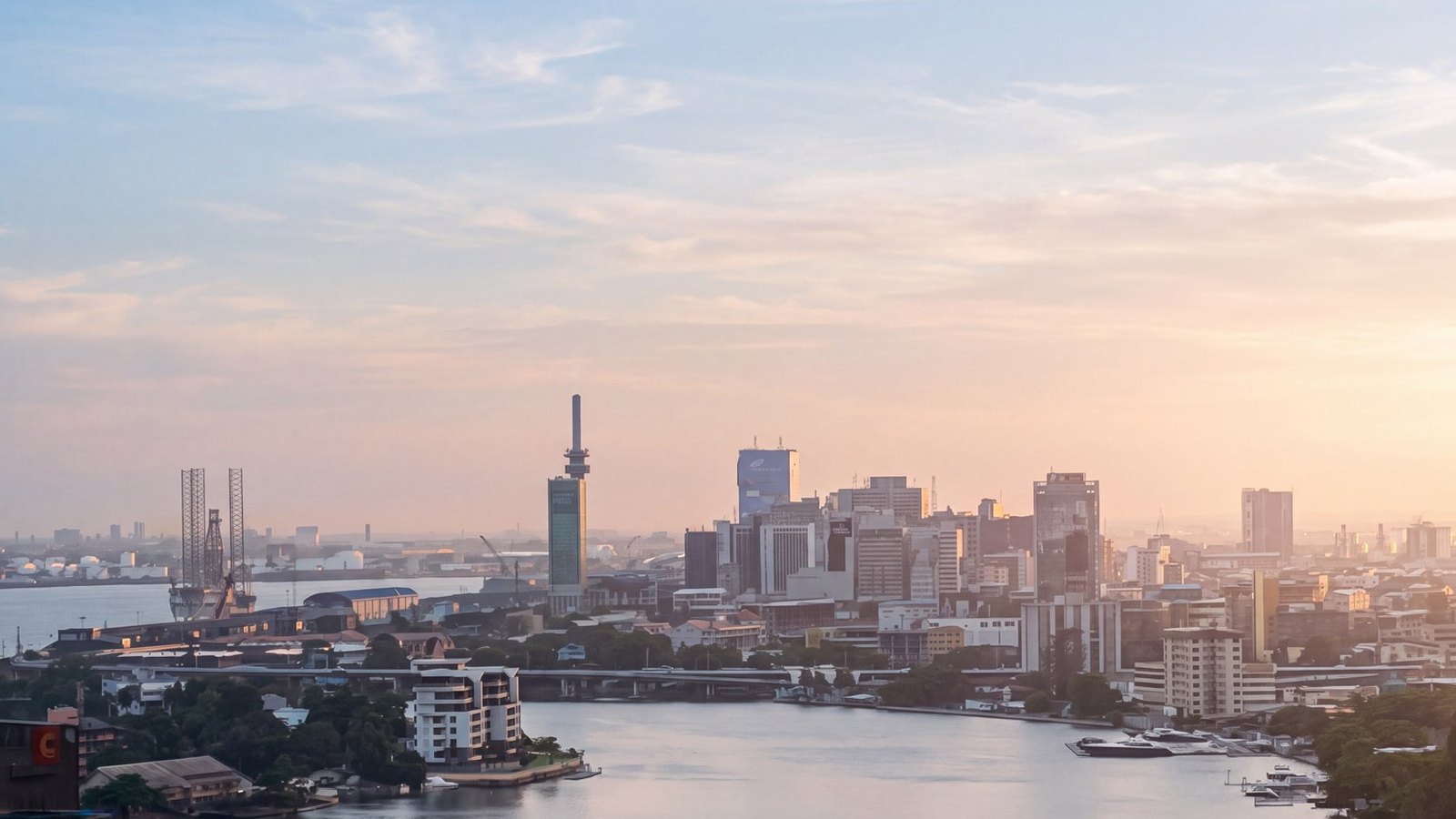
The other constant is Lagos. Since colonial times it has been the place where record labels, radio, nightclubs, owambe parties and, more recently, streaming-era studios cluster. Most of the genres below were either born in Lagos or had to win Lagos to go national.
Traditional foundations: drums, praise and ceremony
Before records, music in Nigeria was functional: it accompanied naming ceremonies, funerals, harvests, kingship rites and religious worship. Much of what sounds like pure entertainment in modern African music from Nigeria still carries that ceremonial DNA.
In Yorubaland the dùndún, the hourglass-shaped talking drum, imitates the rising and falling tones of the Yoruba language. A skilled drummer can “speak” praise names and proverbs. The bàtá drum ensemble, tied to the worship of Ṣàngó, supplies faster, sharper patterns. Both survive in jùjú, fuji and a surprising number of current afrobeats productions.
Igbo music leans on the ogene (a metal gong), the ekwe (a slit drum), and the udu (a clay pot drum). The interlocking bell patterns of ogene music carried straight into the guitar lines of eastern highlife. In the late 2010s and 2020s, Igbo pop artists brought those patterns back into the mainstream again.
Hausa tradition revolves around professional praise singers and court musicians. The long kakaki trumpets herald emirs, the goje fiddle and kuntigi lute accompany storytellers, and singers such as Mamman Shata, Dan Maraya Jos and Barmani Choge became household names across the north on radio. Northern pop today, including the songs that soundtrack Kannywood films, still borrows from that praise-singing tradition.
Nigerian music timeline at a glance
| Era | What dominated | Key names |
|---|---|---|
| 1920s to 1940s | Palm-wine guitar, early jùjú, church music | Tunde King, Irewolede Denge |
| 1950s to 1960s | Dance-band highlife | Bobby Benson, Victor Olaiya, Rex Lawson |
| Late 1960s to 1970s | Jùjú, Afrobeat, eastern guitar highlife | I.K. Dairo, Ebenezer Obey, King Sunny Adé, Fela Kuti |
| 1970s to 1980s | Fuji, Afro-funk, boogie, reggae | Sikiru Ayinde Barrister, William Onyeabor, Sonny Okosun, Majek Fashek |
| 1990s | Industry collapse, early hip-hop and galala | The Remedies, Trybesmen, Daddy Showkey |
| 2000s | Naija pop boom | 2face Idibia, D’banj, P-Square, 9ice, M.I |
| 2010s | Afrobeats goes global | Wizkid, Davido, Burna Boy, Olamide, Tiwa Savage |
| 2020s | Grammys, stadiums, amapiano fusions, alté | Tems, Rema, Asake, Ayra Starr |
Highlife: the first national pop sound
Highlife reached Nigeria from Ghana. Big-band leaders such as E.T. Mensah toured Lagos in the 1950s, and Nigerian bands quickly built their own versions, mixing brass, guitars and ballroom rhythms with local melody.
Myth
Highlife is often described as a Nigerian invention. It took shape in the Gold Coast (now Ghana) first, and Nigerian musicians then built a distinct eastern guitar style of their own that became just as influential.
Bobby Benson ran one of the most influential Lagos dance bands of the 1950s. Victor Olaiya, the “Evil Genius of Highlife,” led the Cool Cats, a band in which a young Fela Ransome-Kuti sang and played before founding his own groups. Olaiya’s “Baby Jowo” later returned for a new generation through a remake with 2Baba.
Cardinal Rex Lawson, from the Niger Delta, wrote some of the most enduring highlife songs of the 1960s, including “Sawale.” Victor Uwaifo, from Benin City, scored a national smash with “Joromi” and pushed the guitar to the front of the band.
The Nigerian Civil War of 1967 to 1970 split the scene. Many Igbo musicians left Lagos for the east, and there they built a stripped-down, guitar-driven style. That style produced Celestine Ukwu’s philosophical “Ije Enu,” Oliver De Coque’s dense guitar workouts and Chief Stephen Osita Osadebe’s 1984 classic “Osondi Owendi.”
Then there is “Sweet Mother,” the 1976 tribute to motherhood by Cameroonian-Nigerian bandleader Prince Nico Mbarga and Rocafil Jazz. Sung in Pidgin over bright, happy guitars, it became one of the most widely played songs in African history. I still hear it at parties in London and Houston where nobody under thirty knows who recorded it.
Highlife never died. In the 2010s Flavour revived eastern highlife for clubs with “Nwa Baby (Ashawo Remix),” and much of today’s afro-pop still uses highlife’s guitar phrasing and melody even when the beats are electronic.
Jùjú and the Lagos party circuit
Jùjú grew out of 1920s and 1930s Lagos palm-wine guitar music. Tunde King is usually credited as its first star. By the 1950s and 1960s, I.K. Dairo had added accordion and talking drum and become the first Nigerian musician honoured with an MBE, in 1963.
The genre exploded once the civil war pushed highlife out of Lagos. Two bandleaders defined its golden age. Chief Commander Ebenezer Obey built a smooth, proverb-rich style he called miliki. King Sunny Adé brought pedal steel guitar, layered talking drums and long, hypnotic dance suites.
Jùjú was built for the owambe, the lavish Yoruba party where guests “spray” banknotes on performers. Bandleaders sang praise for wealthy patrons by name, and that economy shaped how songs were structured: long, open grooves that could stretch for as long as the money kept coming.
King Sunny Adé took jùjú abroad. Island Records released his album Juju Music internationally in 1982, and it earned him a Grammy nomination. For many Western listeners, KSA was the first Nigerian star they saw live.
In the late 1980s Sir Shina Peters gave the genre a faster, flashier edge with his “Afro-juju” sound on the album Ace. Obey eventually moved toward gospel ministry, a path many Nigerian secular stars have followed.
Apala, sakara, waka and fuji: the Yoruba Muslim line
A second Yoruba tradition grew from Islamic practice rather than church or dance-hall culture. Apala, led by Haruna Ishola, used talking drums, shekere and agidigbo (a thumb piano) to back long, philosophical vocal lines. Sakara, associated with Yusuf Olatunji, was earthier and more percussive.
Waka is a vocal style rooted in Muslim women’s singing. Salawa Abeni, crowned the “Queen of Waka,” and Batile Alake carried it into the record era, and it remains one of the few traditional genres where women led from the front.
Fuji grew from were, the music young men performed to wake the faithful for the pre-dawn meal during Ramadan. Sikiru Ayinde Barrister shaped it into a full commercial genre and gave it the name. His long rivalry with Ayinla Kollington defined Yoruba street music through the 1970s and 1980s.
Fuji has kept regenerating. Wasiu Ayinde Marshal, known as K1 De Ultimate, became its dominant star from the 1990s on, followed by Pasuma and Saheed Osupa. In the 2020s, Asake openly built his sound on fuji vocal phrasing laid over amapiano log drums. I think that hybrid is the clearest proof that the old Lagos street sound still powers the newest one.
Fela Kuti and Afrobeat
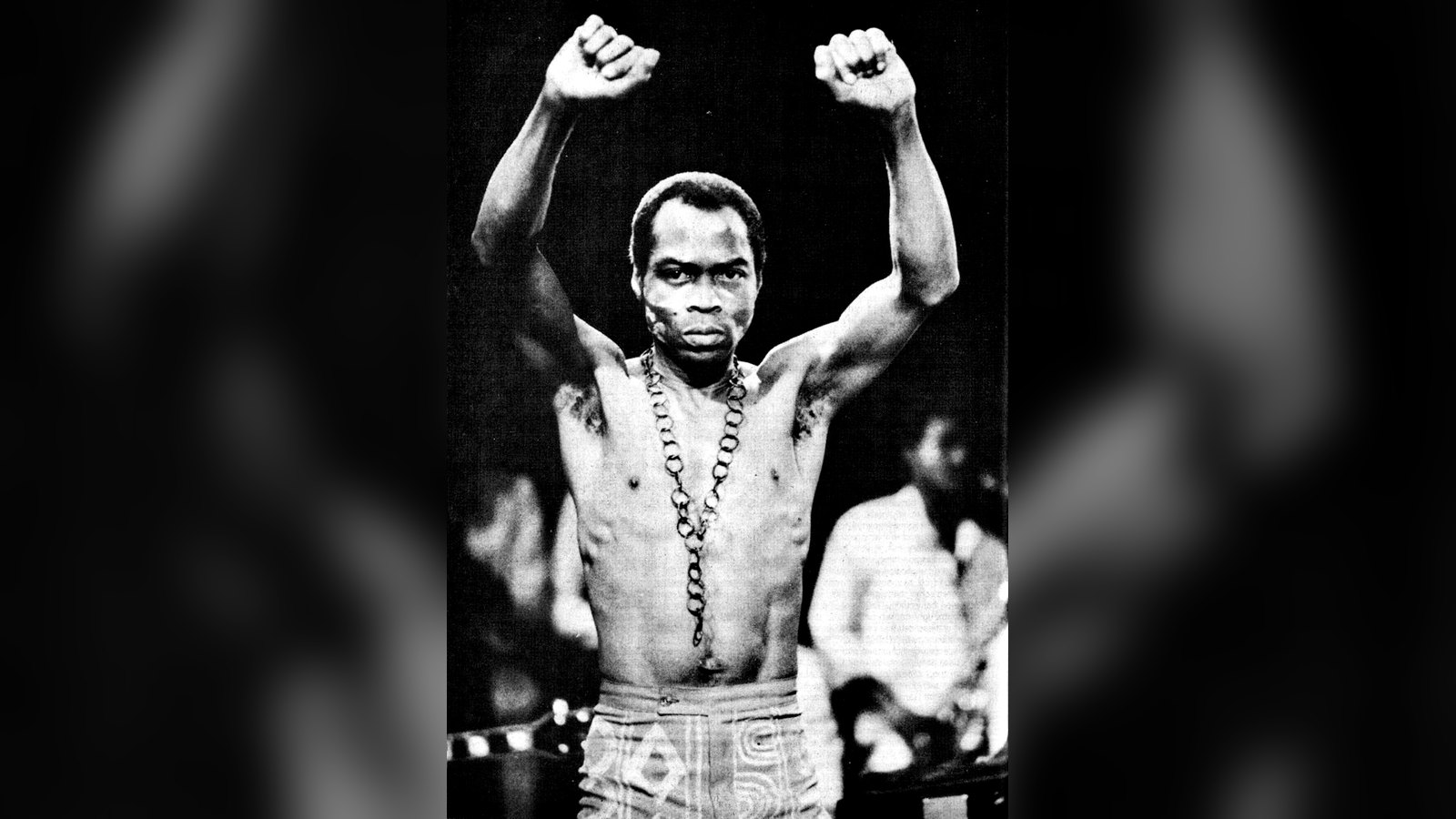
Fela Anikulapo Kuti began as a highlife-jazz musician with his band Koola Lobitos. A 1969 trip to the United States changed him. He met Sandra Izsadore, read Black Power writing and heard James Brown’s funk as a political statement.
Back in Lagos he renamed his band Nigeria 70, then Africa 70, and fused highlife, jùjú rhythm, jazz horns and funk into Afrobeat. Drummer Tony Allen built the music’s rolling, polyrhythmic engine. Fela sang in Pidgin so his attacks on corruption, military rule and colonial thinking could reach the whole country.
Songs stretched past ten minutes. “Water No Get Enemy” (1975) uses a proverb about water’s power to say that nobody can fight what everyone needs. “Zombie” mocked soldiers who follow orders without thinking. The military answered in February 1977 with a brutal raid on Fela’s commune, the Kalakuta Republic. His mother, the activist Funmilayo Ransome-Kuti, was thrown from a window during the attack and died the following year. Fela responded later with “Coffin for Head of State.”
Afrobeat ran parallel to other African experiments of the period: Ethio-jazz in Addis Ababa, a story worth reading alongside the music of Ethiopia, and Manu Dibango’s Soul Makossa from neighbouring Cameroon, which reached American dancefloors in the early 1970s.
Fela died on August 2, 1997. His sons Femi Kuti and Seun Kuti (who still leads Fela’s later band, Egypt 80) have kept the sound alive and collected Grammy nominations, and the Broadway musical FELA! introduced him to theatre audiences in 2009. His club, the Shrine, continues in Lagos as the New Afrika Shrine.
Myth
Afrobeat and afrobeats are often treated as the same genre. Afrobeat is Fela’s 1970s fusion of funk, jazz and Yoruba rhythm, built on long instrumental jams. Afrobeats (with the s) is the umbrella term for 2000s-onward Nigerian and Ghanaian pop, shorter and dance-led. They are related, but they are not the same thing.
The 1970s and 1980s: funk, boogie and reggae
The oil-boom 1970s gave Nigeria money, nightlife and an appetite for imported rock, soul and disco. Bands such as BLO, The Funkees and Ofege made Afro-rock, while Christy Essien-Igbokwe and the Lijadu Sisters brought powerful female vocals into pop.
William Onyeabor recorded strange, synth-heavy funk records such as “Fantastic Man” on his own label in Enugu. They sold modestly at the time and were rediscovered decades later by Western crate-diggers and reissue labels.
Sonny Okosun mixed rock, reggae and highlife into his “ozzidi” sound and used it to support liberation movements in southern Africa on songs like “Papa’s Land” and “Fire in Soweto.” Onyeka Onwenu, a singer and broadcaster, scored with “One Love” and became one of the most respected voices of the decade.
Majek Fashek gave Nigeria its biggest reggae moment with “Send Down the Rain,” a prayer for rain that became a national anthem of sorts in the late 1980s. Ras Kimono and Evi Edna Ogholi followed with their own reggae hits.
The 1990s: collapse and rebuild
The 1980s Structural Adjustment Programme crushed the naira, and imported equipment and vinyl became unaffordable. Multinationals that had pressed Nigerian records for decades, including EMI, Decca and Polygram, scaled back or left. Piracy filled the gap, and live-band culture shrank under military rule and night curfews.
Two policy changes laid the groundwork for a revival. Broadcasting deregulation in the early 1990s licensed private stations, starting with Ray Power FM in 1994 and later Lagos stations such as Cool FM. Those stations needed local content and gave young acts airtime state radio rarely did.
The music of that decade was cheap to make and young in spirit. The Remedies, a trio of Tony Tetuila, Eedris Abdulkareem and Eddy Montana, had a street hit with “Shakomo.” Daddy Showkey popularised galala, a ragga-influenced Lagos ghetto sound. Trybesmen and Junior & Pretty pushed early Nigerian hip-hop. Kennis Music, founded by Kenny Ogungbe and Dayo Adeneye, became the label that turned this scene into a business.
The 2000s: the Naija pop boom
Civilian rule returned in 1999, and with it came a confident new pop scene built on cheap digital production, private radio, music videos and, from the mid-2000s, pan-African TV channels such as MTV Base Africa and Channel O.
2face Idibia (later 2Baba) left the boy band Plantashun Boiz and released “African Queen” in 2004. The acoustic love song travelled across the continent and onto the soundtrack of the 2006 American comedy Phat Girlz. I would call it the first record of the afrobeats era.
Producer Don Jazzy and singer D’banj launched Mo’ Hits Records in 2004 and built a string of hits on Don Jazzy’s synth-heavy beats. Twin brothers P-Square turned slick R&B harmonies and dance routines into a pan-African brand. Styl-Plus scored a radio staple with “Olufunmi.” Asa released her soulful 2007 debut, home to “Jailer,” and found a large following in France.
9ice made Yoruba proverbs cool again with “Gongo Aso” in 2008. That same year Jos rapper M.I Abaga released Talk About It on Chocolate City, and tracks like “Safe” proved that Nigerian hip-hop could sell albums. The Headies awards, launched in 2006 as the Hip Hop World Awards, gave the scene its own industry ceremony.
The 2010s: afrobeats goes global
The new decade arrived with three young stars. Wizkid’s “Holla at Your Boy” (2010) on Empire Mates Entertainment introduced a teenage singer with a light, melodic voice. Davido, son of a billionaire businessman, broke through with “Dami Duro” in 2011. Burna Boy surfaced with “Like to Party” in 2012.
D’banj signed with Kanye West’s GOOD Music in 2011, and “Oliver Twist” reached No. 9 on the UK Singles Chart in 2012. In London, DJ Abrantee is widely credited with popularising the label “afrobeats” around 2011 as a catch-all for this Nigerian and Ghanaian club music.
Mo’ Hits split in 2012. Don Jazzy founded Mavin Records, which became home to Tiwa Savage and, later, Rema and Ayra Starr. Olamide launched YBNL the same year and turned indigenous-language street rap into the biggest sound in the country, with hits like “Shakiti Bobo.” Ice Prince, Phyno and Flavour proved that rapping and singing in Yoruba, Igbo and Pidgin was a strength.
Wizkid’s “Ojuelegba” (2014), named after the Lagos district where he grew up, told a struggle-to-success story so plainly that Drake and Skepta jumped on a remix. In 2016 Wizkid featured on Drake’s One Dance, which spent ten weeks at No. 1 on the Billboard Hot 100 and pushed Nigerian rhythm onto global playlists.
Davido’s “Fall” (2017) became a slow-burning international hit and was later certified Gold by the RIAA. Burna Boy’s “Ye” (2018) blew up worldwide, helped in part by listeners who reportedly streamed it while searching for Kanye West’s album of the same name. Yemi Alade’s “Johnny” (2014) became one of the most-watched African music videos of its time, and Tiwa Savage won Best African Act at the 2018 MTV EMAs, the first woman to take that prize.
By the close of the decade, a separate “street-pop” wave had emerged. Zlatan’s “Zanku” dance and the music around it ruled Lagos parties, while alté artists such as Odunsi (The Engine), Lady Donli and Cruel Santino built an experimental, fashion-forward scene. Santino’s “Rapid Fire” with Skepta became its signature track.
The 2020s: Grammys, stadiums and amapiano
Global recognition arrived fast. In March 2021, Burna Boy’s Twice as Tall won Best Global Music Album at the 63rd Grammys, and Wizkid won Best Music Video for Beyoncé’s “Brown Skin Girl,” on which he featured.
Wizkid’s Made in Lagos (October 2020) produced “Essence” with Tems. The Justin Bieber remix reached No. 9 on the Billboard Hot 100, a first for a Nigerian song. When Billboard launched its U.S. Afrobeats Songs chart in March 2022, the UK Official Afrobeats Chart (launched July 2020) and Nigeria’s own TurnTable Top 100 (launched 2020) were already tracking the boom closely.
Tems became the decade’s breakout voice. She featured on Future’s “Wait for U” alongside Drake, which went to No. 1 on the Hot 100 in 2022 and won Best Melodic Rap Performance at the 2023 Grammys. She co-wrote Rihanna’s “Lift Me Up” for Black Panther: Wakanda Forever, which earned an Academy Award nomination for Best Original Song. In February 2025 her “Love Me JeJe” won Best African Music Performance.
Rema’s “Calm Down,” given a remix with Selena Gomez, peaked at No. 3 on the Hot 100 in 2023 and held the top of Billboard’s U.S. Afrobeats Songs chart for most of that year. CKay’s “Love Nwantiti,” a 2019 song that went viral on TikTok in 2021, entered the Hot 100 and showed how a short clip could revive a song years after release.
Burna Boy sold out Madison Square Garden in April 2022 and, in June 2023, headlined London Stadium. His 2022 single “Last Last” built on a Toni Braxton sample to deliver a heartbreak anthem that charted on the Hot 100. In recent years, reports of Burna Boy at the Ballon d’Or presenting an award showed how far the culture had travelled beyond music.
How amapiano became part of Nigerian pop
Amapiano is South African, born in Gauteng townships in the mid-2010s, and Nigeria adopted it with real enthusiasm. Davido’s 2021 remix of Focalistic’s “Ke Star” signalled the crossover. By 2022, Asake’s “Sungba” and its Burna Boy remix had turned log drums and Yoruba-fuji vocals into the defining Lagos sound of the year.
The 2024 Grammy nominees for Best African Music Performance showed the shift. They included Asake and Olamide’s “Amapiano,” Burna Boy’s “City Boys,” Davido’s “Unavailable” and Ayra Starr’s “Rush,” although South Africa’s Tyla won with “Water.” Many Nigerian producers now treat amapiano elements as part of the standard toolkit for afrobeats music.
The new themes: emigration, protest and money
The lyrics changed along with the beats. Economic hardship and a wave of emigration produced a body of japa music, songs about leaving Nigeria for the UK, Canada or the US. The 2020 #EndSARS protests against police brutality drew in many artists, and the Yoruba phrase “soro soke” (speak up) became a rallying cry.
Business changed too. Master recordings became prized assets, majors opened Nigerian offices, and Universal Music Group acquired a controlling stake in Mavin in 2024. Since then, major-label money and global streaming have shaped which Nigerian artists get pushed abroad.
Gospel music in Nigeria
Gospel is one of the best-selling categories in Nigeria and is often overlooked by foreign coverage. The country’s churches, from Pentecostal megachurches to Cherubim and Seraphim congregations, are major music venues in their own right.
Sinach’s “Way Maker” is the scene’s biggest global export. Covered by Leeland, Michael W. Smith and countless church choirs, it became one of the most-sung worship songs worldwide.
Other key names include Panam Percy Paul from an earlier generation, the late Kefee with “Branama,” and current leaders Nathaniel Bassey, Frank Edwards, Mercy Chinwo, Moses Bliss, Dunsin Oyekan and Tope Alabi, whose Yoruba worship songs fill stadium crusades. Nigerian gospel borrows freely from highlife, afro-pop and even amapiano beats.
Hip-hop, from Trybesmen to Odumodublvck
Nigerian hip-hop started in the 1990s with acts such as Trybesmen and the lyrical rapper Modenine. M.I Abaga’s Talk About It era at Chocolate City made it commercially viable, and Ice Prince’s “Oleku” (2010) made it radio-friendly.
The real shift came when rappers switched to indigenous languages. Olamide in Yoruba and Phyno in Igbo proved that local-language rap could outsell English. Vector, Falz, Blaqbonez and A-Q kept the lyrical tradition alive.
In 2023, Odumodublvck’s “Declan Rice,” named after the English footballer, became a street and festival anthem. It led a grittier, drill-influenced Abuja-and-Lagos rap revival that pulls in younger listeners who find mainstream afro-pop too polished.
Nine genres compared
| Genre | Roots | Defining artists | Signature track |
|---|---|---|---|
| Highlife | Ghanaian dance bands, Igbo guitar | Rex Lawson, Osita Osadebe, Flavour | “Sweet Mother” |
| Jùjú | Lagos palm-wine guitar | I.K. Dairo, Ebenezer Obey, King Sunny Adé | “Synchro System” |
| Apala | Yoruba Muslim drumming | Haruna Ishola | Ishola’s 1960s recordings |
| Fuji | Ramadan were music | Sikiru Ayinde Barrister, K1 De Ultimate | Barrister’s fuji albums |
| Afrobeat | Highlife, jazz, funk | Fela Kuti, Tony Allen, Femi and Seun Kuti | “Water No Get Enemy” |
| Gospel | Church choirs, highlife | Sinach, Nathaniel Bassey, Mercy Chinwo | “Way Maker” |
| Hip-hop | US rap, local street slang | M.I Abaga, Olamide, Odumodublvck | “Declan Rice” |
| Afrobeats / afro-pop | Highlife, dancehall, R&B, fuji | Wizkid, Davido, Burna Boy, Rema | “Essence” |
| Alté | Indie, R&B, rap, fashion culture | Odunsi (The Engine), Cruel Santino, Lady Donli | “Rapid Fire” |
35 songs that defined Nigeria’s music
I built this list to cover every major turn in the story, from highlife to the current crop of Grammy winners. It is a listening path, not a popularity ranking. Play it in order and the history explains itself.
| Era | Song | Artist | Why it matters |
|---|---|---|---|
| 1960s | Baby Jowo | Victor Olaiya | Lagos dance-band highlife at its peak |
| 1960s | Sawale | Cardinal Rex Lawson | Niger Delta highlife standard |
| 1960s | Joromi | Victor Uwaifo | Put the guitar at the front |
| 1970s | Ije Enu | Celestine Ukwu | Philosophical eastern highlife |
| 1975 | Water No Get Enemy | Fela Kuti & Africa 70 | Afrobeat built on a proverb |
| 1970s | Zombie | Fela Kuti & Africa 70 | Satire that provoked the 1977 raid |
| 1976 | Sweet Mother | Prince Nico Mbarga & Rocafil Jazz | A continental Pidgin anthem |
| 1970s | Fantastic Man | William Onyeabor | Synth-funk rediscovered decades later |
| 1970s | Papa’s Land | Sonny Okosun | Rock-reggae liberation song |
| 1983 | Synchro System | King Sunny Adé | Jùjú’s international era |
| 1984 | Osondi Owendi | Osita Osadebe | Defining Igbo highlife |
| 1980s | Send Down the Rain | Majek Fashek | Nigeria’s reggae high point |
| 1980s | One Love | Onyeka Onwenu | Pop ballad that outlived its decade |
| 1990s | Shakomo | The Remedies | Sound of the 1990s revival |
| 2000s | Olufunmi | Styl-Plus | Wedding and radio staple |
| 2004 | African Queen | 2face Idibia | Opened the afrobeats era |
| 2007 | Jailer | Asa | Soul-folk with global reach |
| 2008 | Gongo Aso | 9ice | Yoruba proverbs back in pop |
| 2008 | Safe | M.I Abaga | Commercial Nigerian hip-hop arrives |
| 2010 | Holla at Your Boy | Wizkid | A future star’s debut |
| 2011 | Dami Duro | Davido | Davido’s breakout |
| 2011 | Oliver Twist | D’banj | UK top 10 in 2012 |
| 2014 | Ojuelegba | Wizkid | Lagos street story, global remix |
| 2014 | Johnny | Yemi Alade | Pan-African video hit |
| 2010s | Way Maker | Sinach | Worldwide worship anthem |
| 2016 | One Dance | Drake ft. Wizkid & Kyla | Ten weeks at Hot 100 No. 1 |
| 2017 | Fall | Davido | RIAA Gold slow-burner |
| 2018 | Ye | Burna Boy | Burna’s global breakthrough |
| 2019 | Love Nwantiti | CKay | TikTok-era crossover |
| 2019 | Rapid Fire | Cruel Santino ft. Skepta | Alté’s flagship |
| 2020 | Essence | Wizkid ft. Tems | First Nigerian song in Hot 100 top 10 (remix) |
| 2022 | Last Last | Burna Boy | Heartbreak anthem on the Hot 100 |
| 2022 | Calm Down | Rema | No. 3 on the Hot 100 (remix) |
| 2022 | Sungba | Asake | Fuji meets amapiano |
| 2024 | Love Me JeJe | Tems | Won Best African Music Performance at the 2025 Grammys |
Global milestones for Nigerian music
| Year | Artist | Milestone |
|---|---|---|
| 1963 | I.K. Dairo | MBE for services to music |
| 1982 | King Sunny Adé | Juju Music released internationally by Island Records, later earning a Grammy nomination |
| 2012 | D’banj | “Oliver Twist” reaches No. 9 on the UK Singles Chart |
| 2016 | Wizkid | Features on “One Dance,” 10 weeks at Hot 100 No. 1 |
| 2021 | Burna Boy | Wins Best Global Music Album for Twice as Tall |
| 2021 | Wizkid | Wins Best Music Video for “Brown Skin Girl” |
| 2021 | Wizkid | “Essence” remix peaks at No. 9 on the Hot 100 |
| 2022 | Burna Boy | Sells out Madison Square Garden |
| 2023 | Tems | Wins Best Melodic Rap Performance for “Wait for U” |
| 2023 | Rema | “Calm Down” remix peaks at No. 3 on the Hot 100 |
| 2023 | Burna Boy | Headlines London Stadium |
| 2025 | Tems | Wins Best African Music Performance for “Love Me JeJe” |
Reading Nigerian lyrics: a short glossary
Half the fun of Nigerian songs is the language switching. These are terms I hear constantly, explained in plain English.
| Word or phrase | Language | Rough meaning |
|---|---|---|
| Wahala | Pidgin (from Hausa) | Trouble, stress |
| Japa | Yoruba slang | To flee; now, to emigrate |
| Sapa | Nigerian slang | Being broke |
| Gbedu | Yoruba | A drum; slang for a party banger |
| Owambe | Yoruba | A lavish, money-spraying party |
| Jeje | Yoruba | Gently, softly |
| Last last | Pidgin | In the end, eventually |
| Buga | Pidgin | To show off, to flex |
| Nwantiti | Igbo | Small, little |
| Odogwu | Igbo | A great man, a champion |
| Soro soke | Yoruba | Speak up |
How I keep up with the latest Nigerian songs
New music arrives every week, and singles often peak within a month of release. That makes “latest Naija songs” lists out of date almost as soon as they are published, so I track the charts directly.
The TurnTable Top 100 is the most useful Nigerian chart because it blends streaming, radio and TV data from inside the country. The UK Official Afrobeats Chart shows what the diaspora is playing, and Billboard’s U.S. Afrobeats Songs chart shows which tracks are crossing into American listening. When a song climbs all three in the same week, it is usually the real deal.
For awards context, I follow the Headies, the Grammys’ African categories and the Trace and MTV-affiliated awards. I treat fan-voted categories with more caution than juried ones.
Why I skip MP3 download sites
The search results for this topic are crowded with blogs offering a free MP3 copy of every new song. Many of those sites do not have rights to the files, they run aggressive pop-up ads, and some push downloads that can carry malware. They also pay artists nothing.
Free, legal options exist. Audiomack and Boomplay, both widely used in Nigeria, offer free ad-supported tiers. Spotify and Apple Music have large Nigerian catalogues, and most artists post official videos and audio on YouTube. Every legal stream feeds the chart data above, so it helps the artists you play move up.
Listen next
After this history, play Fela Kuti’s “Water No Get Enemy” and Asake’s “Sungba” back to back. Fifty years separate them, and you will hear the same Lagos street rhythm underneath both.
FAQ
What is the most popular music in Nigeria right now?
Afrobeats, in its many forms, dominates the charts. That includes afro-pop, street-pop and amapiano-influenced tracks. Gospel, fuji and hip-hop also have large audiences, and highlife remains a staple at weddings and parties, especially in the southeast.
What is the difference between Afrobeat and afrobeats?
Afrobeat is Fela Kuti’s 1970s fusion of funk, jazz and Yoruba rhythm, with long instrumental passages and political lyrics. Afrobeats is the broader 2000s-onward label for Nigerian and Ghanaian pop. It is shorter, more dance-led and borrows from R&B, dancehall, highlife and fuji.
Who are the biggest Nigerian artists?
By global reach, the current leaders are Burna Boy, Wizkid, Davido, Tems, Rema, Asake and Ayra Starr. Historically, Fela Kuti, King Sunny Adé, Ebenezer Obey, Osita Osadebe and 2Baba are among the most important figures in Nigeria’s music.
What is traditional African music from Nigeria called?
There is no single name, because each region has its own traditions. Yoruba drum music (dùndún and bàtá), Igbo ogene and ekwe music, and Hausa praise singing with kakaki trumpets and goje fiddles are the best-known traditional forms. Apala, sakara and waka are early recorded genres that grew directly from them.
Is amapiano Nigerian?
No. Amapiano began in South Africa in the mid-2010s. Nigerian artists such as Asake, Davido and Olamide adopted its log-drum sound in the early 2020s and blended it with fuji and afrobeats, which is why many listeners now associate it with Lagos as well.
Has a Nigerian artist won a Grammy?
Yes. Burna Boy won Best Global Music Album in 2021 for Twice as Tall, and Wizkid won Best Music Video the same night for “Brown Skin Girl.” Tems won Best Melodic Rap Performance in 2023 for “Wait for U” and Best African Music Performance in 2025 for “Love Me JeJe.”